
Stinging Nettle Root: Urinary Flow and Night-Time Urination
By Real Herbs Editorial Team · Published October 2026 · Updated October 2026 · 8 min read
Key takeaway: Two nettle root trials measured urine flow and gave different pictures: in 620 men the peak flow rose by 8.2 mL/s with nettle against 3.4 mL/s with placebo, while in 246 men the gain was about the same as placebo. For night-time urination, the evidence comes from a combined analysis of a nettle root and saw palmetto product, which cut night-time voids by 0.8 against 0.6 with placebo, and nettle root alone has not been tested for nocturia in the trials cited here. Trials ran from 12 weeks to 12 months, so any change is best judged over months.
Weak stream, leftover urine and waking at night to pass urine are among the most common reasons men look at stinging nettle root (Urtica dioica). This guide sets out what clinical trials report for urine flow, leftover urine and night-time urination (nocturia), how the results differ, and when to see a doctor.
Disclosure: Real Herbs sells a stinging nettle root extract. We report each result as it was published, and the trials did not test this exact product.
Flow, leftover urine and nocturia
As the prostate enlarges in benign prostatic hyperplasia (BPH), it can squeeze the urethra, the tube that carries urine out of the bladder. Common symptoms include trouble starting a stream, a weak or interrupted stream, dribbling at the end, nocturia (waking at night to urinate), urgency and frequency ([1]).
Trials measure these in three main ways. Peak urine flow (Qmax) is the highest flow rate during a urination, in millilitres per second. Leftover urine (post-void residual) is the amount still in the bladder after urinating. Night-time voids are counted with question 7 of the International Prostate Symptom Score (IPSS), the questionnaire used in most BPH trials; a lower IPSS means fewer symptoms.
What trials report for urine flow
Two trials of nettle root alone and three trials or follow-ups of combination products give flow or leftover-urine numbers in their abstracts. The table lists them side by side.
Swipe sideways to see all columns.
| Trial | Men and length | Product | Peak urine flow | Leftover urine |
|---|---|---|---|---|
| Safarinejad 2005 | 620 men; 6 months controlled, followed to 18 months | Nettle extract | Rose by 8.2 mL/s with nettle and 3.4 mL/s with placebo ([2], PMID 16635963) | Fell from 73 to 36 mL with nettle; no appreciable change with placebo ([2], PMID 16635963) |
| Schneider 2004 | 246 men; 12 months | Nettle root dry extract, 459 mg | Median rise of 3.0 mL/s with the extract and 2.9 mL/s with placebo, not a significant difference ([3], PMID 15045190) | 35.5 to 20.0 mL with the extract and 40.0 to 21.0 mL with placebo |
| Sökeland 1997 | 543 men; 48 weeks | Nettle and saw palmetto combination, compared with finasteride | Rose by 1.9 mL/s with the combination and 2.4 mL/s with finasteride ([4], PMID 9340898) | Not given in the abstract |
| Lopatkin 2007 (open follow-up) | 219 men followed to week 96; all men took the combination after week 24 | Same combination | Rose by 19% from baseline ([5], PMID 18038253) | Fell by 44% from baseline |
| Melo 2002 | 49 men; 6 months | Pygeum 25 mg + nettle extract 300 mg | Rose by 17.2% with the combination and 13.3% with placebo, not a significant difference ([6], PMID 15748367) | Not given in the abstract |
Human trial The largest trial reported the biggest gains in flow and leftover urine. It was a partial crossover study in which only the first 6 months compared nettle with placebo, the author noted that more trials were needed, and its results have not yet been repeated at this scale ([2], PMID 16635963). PubMed lists some other papers by the same author as retracted; this paper is not marked as retracted. The 12-month trial in 246 men found flow and leftover urine changes similar to placebo, and its authors noted that a strong increase in flow or a drop in residual urine should not be expected ([3], PMID 15045190).
Combination extract The combination results cannot be read as results for nettle root alone. In the finasteride comparison, flow rose by a similar amount in both groups ([4], PMID 9340898). In the open-label follow-up, every man took the combination after week 24, so its changes from baseline include any placebo effect ([5], PMID 18038253). The pygeum and nettle combination performed similarly to placebo ([6], PMID 15748367).
Results across these studies vary with the extract, the dose and the design, so they are best read as showing what each study found and not as a fixed expectation. Our guide to nettle root for BPH covers the symptom-score results in more detail.
What trials report for night-time urination
The main evidence on nocturia comes from a post hoc analysis of four published trials of a fixed product containing saw palmetto and nettle root extracts (PRO 160/120). It included 922 men with a mean age of 66 who passed urine 2.1 times a night on average at the start ([7], PMID 24938176).
Swipe sideways to see all columns.
| Measure | Combination (PRO 160/120) | Placebo |
|---|---|---|
| Reduction in night-time voids after 24 weeks (two placebo-controlled trials pooled) | 0.8 fewer voids (29%) | 0.6 fewer voids (18%) |
| Men who improved (responders) | 69% | 52% |
The analysis reported that most responders improved by one void a night, and that there were no differences between the combination and tamsulosin or finasteride in the other two trials ([7], PMID 24938176). Because this was a post hoc analysis of a combination product, it shows what happened with that product in those trials. We found no trial of nettle root alone that reports nocturia as its main outcome.
How long trials lasted
Nettle-alone trials ran from 12 weeks ([8], PMID 32981268) to 12 months ([3], PMID 15045190), the largest followed men for up to 18 months ([2], PMID 16635963), and the combination trials ran 24 to 48 weeks ([9], PMID 15928959; [4], PMID 9340898). Changes in flow and night-time voids were assessed after months, so a few days or weeks may be too early to judge.
Tracking your own symptoms
A simple record helps you and your doctor see whether anything has changed:
- Night-time voids: count how many times you wake to pass urine, averaged over a week, before you start and again every month or so.
- IPSS: complete the same seven-question score each time, because it is the measure used in most trials.
- Stream and emptying: note whether the stream is weaker or stronger and whether you feel you empty completely.
- Doctor visits: share the record at reviews, and keep regular prostate checks.
When to see a doctor
See a doctor to find the cause of urinary symptoms before starting nettle root, because BPH and prostate cancer can cause the same symptoms ([1]). The EMA advises seeing a doctor again if complaints worsen or if fever, spasms, blood in the urine, painful urination or urinary retention occur ([10]). The NIDDK lists these as needing urgent care: being unable to urinate at all, blood in the urine, painful, frequent and urgent urination with fever and chills, or great pain in the lower abdomen ([1]). For side effects and who should check first, see our safety guide.
Frequently asked questions
Does nettle root improve urine flow?
Results vary. In a 620-man trial, peak flow rose by 8.2 mL/s with nettle and 3.4 mL/s with placebo. In a 246-man, 12-month trial the rise was about the same as placebo, and the authors said a strong increase in flow should not be expected.
Does nettle root help with night-time urination?
A combined analysis of four trials of a nettle root and saw palmetto product found 0.8 fewer night-time voids against 0.6 with placebo. Nettle root alone has not been tested for nocturia as a main outcome in the trials cited here.
How many fewer times a night might I pass urine?
In the combination analysis, most responders improved by one void a night, and 69% of men on the product improved against 52% on placebo. Individual results vary.
Does nettle root reduce leftover urine?
In the 620-man trial leftover urine fell from 73 to 36 mL with nettle, with no appreciable change on placebo. In the 246-man trial it fell by similar amounts with the extract and with placebo.
How long does it take to notice a change?
The trials assessed changes over 12 weeks to 12 months, so it makes sense to judge any change over months and to review it with your doctor.
Does nettle root shrink the prostate?
The 620-man trial reported a modest fall in ultrasound prostate size, from 40.1 to 36.3 cc, with no change on placebo. This has not yet been repeated at that scale.
Is nettle root as good as tamsulosin or finasteride?
No trial compared nettle root alone with these medicines. A nettle and saw palmetto combination showed similar night-time void reductions to tamsulosin and finasteride in a post hoc analysis. Do not stop a prescribed medicine without talking to your doctor.
Should I see a doctor before trying nettle root for night-time urination?
Yes. Urinary symptoms can come from BPH or from other conditions, including prostate cancer, so get them checked first and keep up your regular prostate checks.
Is this about nettle root or nettle leaf?
Nettle root. Leaf is a different material studied for different purposes, so findings about leaf should not be read across to the root.
The bottom line
Trials of nettle root report improvements in urine flow and leftover urine that vary between studies, with the largest gain in the largest trial and results similar to placebo in another. The best evidence for fewer night-time trips comes from a combination product and not nettle root alone. If you want to try nettle root, get your symptoms checked first, track them over several months, and review the results with your doctor.
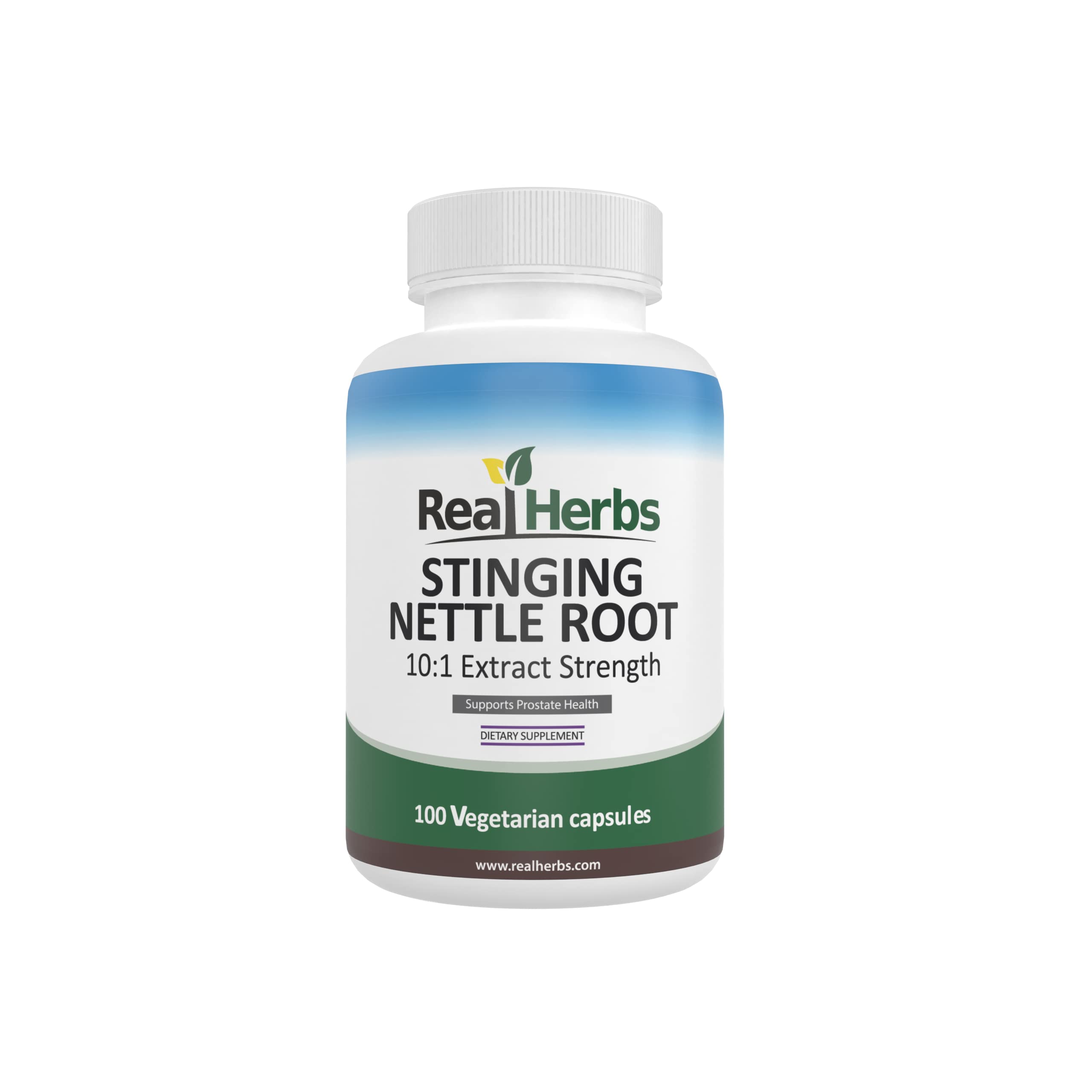
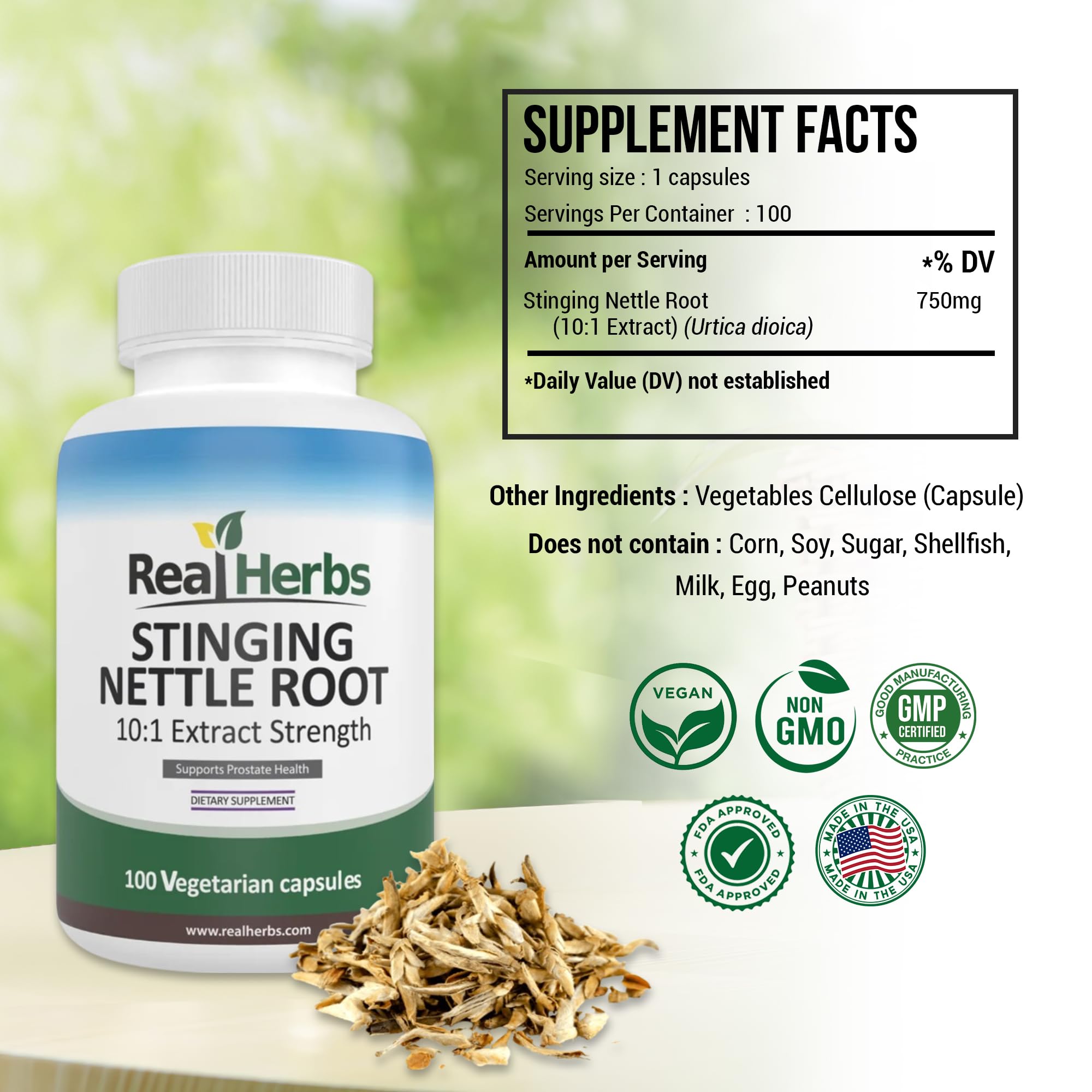
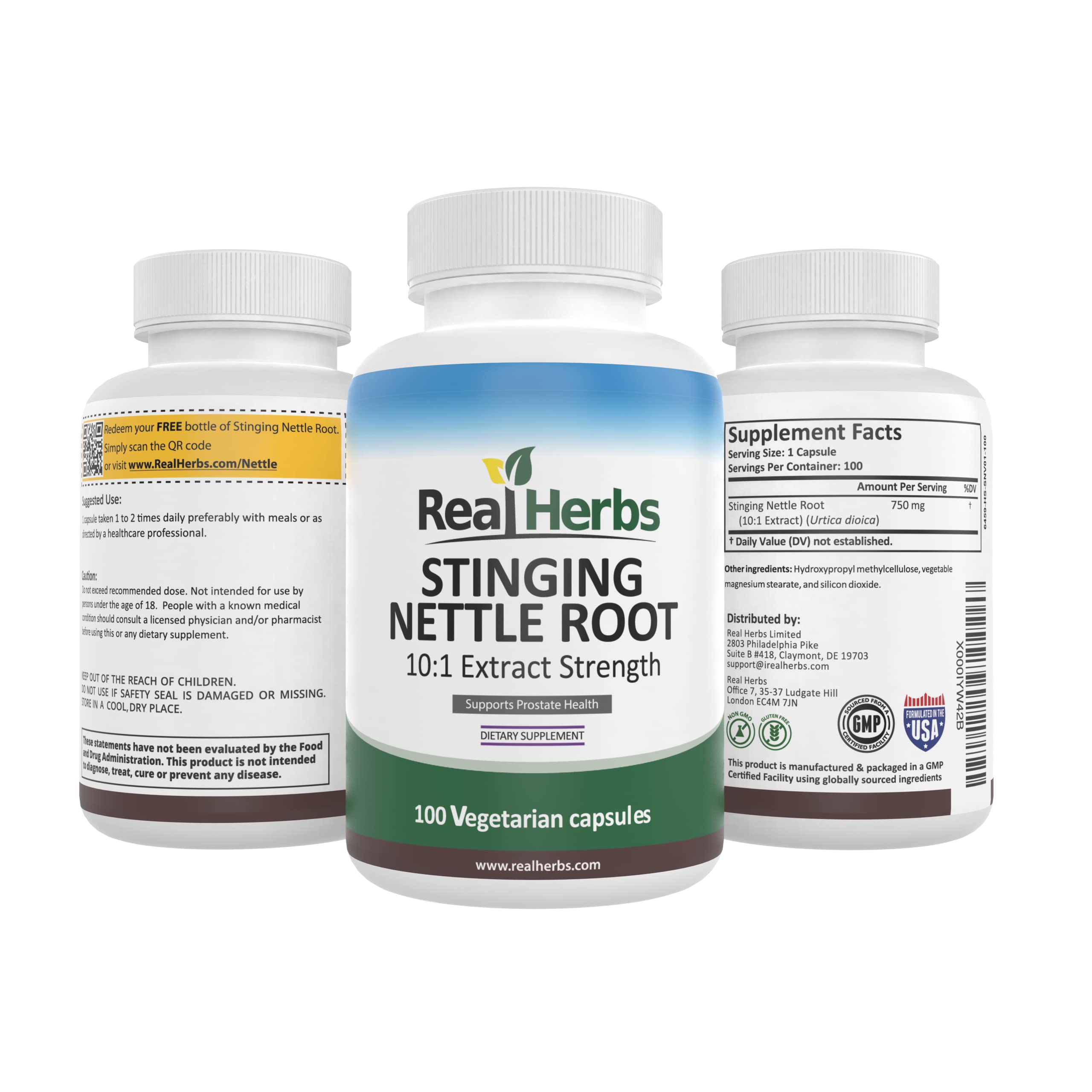
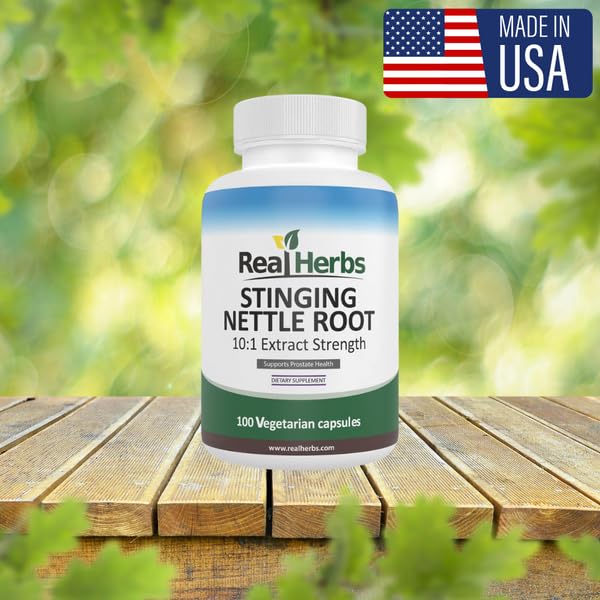
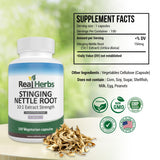
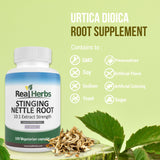
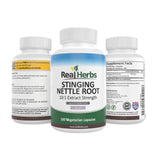
Real Herbs Stinging Nettle Root Extract: 750 mg of 10:1 root extract per capsule (about 7,500 mg dried root equivalent), 100 vegetarian capsules. Backed by our 100-Day Money-Back Guarantee. Real Herbs sells this product. The trials and the EMA documents did not test this exact product.
Related reading
- Stinging nettle root for BPH: what the research shows
- Nettle root dosage, timing and forms
- Nettle root side effects and who should avoid it
References
- National Institute of Diabetes and Digestive and Kidney Diseases. Prostate enlargement (benign prostatic hyperplasia). Page reviewed June 2024. niddk.nih.gov
- Safarinejad MR. Urtica dioica for treatment of benign prostatic hyperplasia: a prospective, randomized, double-blind, placebo-controlled, crossover study. J Herb Pharmacother. 2005;5(4):1-11. PMID 16635963
- Schneider T, Rübben H. Stinging nettle root extract (Bazoton-uno) in long term treatment of benign prostatic syndrome (BPS). Results of a randomized, double-blind, placebo controlled multicenter study after 12 months (in German). Urologe A. 2004;43(3):302-6. PMID 15045190 · DOI 10.1007/s00120-004-0532-7
- Sökeland J, Albrecht J. Combination of Sabal and Urtica extract vs. finasteride in benign prostatic hyperplasia (Aiken stages I to II). Comparison of therapeutic effectiveness in a one year double-blind study (in German). Urologe A. 1997;36(4):327-33. PMID 9340898 · DOI 10.1007/s001200050106
- Lopatkin N, Sivkov A, Schläfke S, Funk P, Medvedev A, Engelmann U. Efficacy and safety of a combination of Sabal and Urtica extract in lower urinary tract symptoms: long-term follow-up of a placebo-controlled, double-blind, multicenter trial. Int Urol Nephrol. 2007;39(4):1137-46. PMID 18038253 · DOI 10.1007/s11255-006-9173-7
- Melo EA, Bertero EB, Rios LA, Mattos D. Evaluating the efficiency of a combination of Pygeum africanum and stinging nettle (Urtica dioica) extracts in treating benign prostatic hyperplasia (BPH): double-blind, randomized, placebo controlled trial. Int Braz J Urol. 2002;28(5):418-25. PMID 15748367
- Oelke M, Berges R, Schläfke S, Burkart M. Fixed-dose combination PRO 160/120 of sabal and urtica extracts improves nocturia in men with LUTS suggestive of BPH: re-evaluation of four controlled clinical studies. World J Urol. 2014;32(5):1149-54. PMID 24938176 · DOI 10.1007/s00345-014-1338-x
- Akbar Karami A, Sheikhsoleimani M, Reza Memarzadeh M, Haddadi E, Bakhshpour M, Mohammadi N, et al. Urtica Dioica Root Extract on Clinical and Biochemical Parameters in Patients with Benign Prostatic Hyperplasia, Randomized Controlled Trial. Pak J Biol Sci. 2020;23(10):1338-1344. PMID 32981268 · DOI 10.3923/pjbs.2020.1338.1344
- Lopatkin N, Sivkov A, Walther C, Schläfke S, Medvedev A, Avdeichuk J, et al. Long-term efficacy and safety of a combination of sabal and urtica extract for lower urinary tract symptoms--a placebo-controlled, double-blind, multicenter trial. World J Urol. 2005;23(2):139-46. PMID 15928959 · DOI 10.1007/s00345-005-0501-9
- European Medicines Agency, Committee on Herbal Medicinal Products. Assessment report on Urtica dioica L.; Urtica urens L., radix. EMA/HMPC/322627/2023. Final, Revision 1, 22 January 2025. ema.europa.eu
Disclaimer: This article is for educational purposes only and is not medical advice. Talk with a qualified healthcare professional before starting any supplement, especially if you have a medical condition or take medication. These statements have not been evaluated by the Food and Drug Administration. This product is not intended to diagnose, treat, cure, or prevent any disease.