
Stinging Nettle Root, Kidney and Urinary Tract Health
By Real Herbs Editorial Team · Published October 2026 · Updated October 2026 · 6 min read
Key takeaway: We found no human trial of nettle root on kidney function, kidney stones or urinary tract infections. The laboratory work on kidneys and stones used leaf or aerial-part extracts in rats, and the root's EMA-listed traditional use is for urinary symptoms of BPH, not for kidney conditions. Folk use of nettle as a mild diuretic and for kidney stones is recorded, but it has not been tested for the root in people.
Nettle is often described as good for the kidneys and the urinary tract. This guide separates the parts of that claim: what the kidneys and urinary tract are, what has been studied, which plant part was used, what the EMA lists, and which symptoms need a doctor and not a supplement.
Disclosure: Real Herbs sells a stinging nettle root extract. We report each study as it was published, and none of them tested this product.
Kidneys, bladder and prostate
The kidneys filter blood and make urine, which travels through the ureters to the bladder and leaves through the urethra. In men the urethra passes through the prostate, which is why an enlarged prostate (BPH) can cause a weak stream or night-time urination without any problem in the kidneys themselves. The nettle root research in men is about those prostate-related urinary symptoms; see our urinary flow guide and BPH guide. Kidney stones and urinary tract infections are different conditions with different causes.
What the studies report
We found no human trial of nettle root alone that measured kidney function, stone formation or urinary tract infection. The kidney and stone studies we found are in rats, and they used leaf or aerial parts.
Swipe sideways to see all columns.
| Study | Model | Plant part | What was reported |
|---|---|---|---|
| Zhang 2014 | Rats given ethylene glycol and ammonium chloride to form calcium oxalate stones | Methanolic extract of aerial parts | Lower urinary calcium and oxalate, and less calcium and oxalate deposited in the kidney ([1], PMID 25310585) |
| Hajihashemi 2020 | Rats with kidney injury caused by the antibiotic gentamicin; 8 days | Methanolic leaf extract, 200 mg/kg a day | Lower creatinine and blood urea nitrogen and higher creatinine clearance than with gentamicin alone ([2], PMID 32523882) |
| Vajic 2024 | Spontaneously hypertensive rats; 4 weeks | Leaf extract, 10, 50 and 200 mg/kg a day | The 50 mg/kg dose lowered pressure, albumin in the urine and markers of kidney oxidative stress, similar to losartan ([3], PMID 39769037) |
| Tahri 2000 | Anaesthetised rats, infusion | Aqueous extract of aerial parts | More urine and sodium excretion at both doses, with a possible toxic effect suggested at the high dose ([4], PMID 11025144) |
Animal study A review of dietary plants for kidney stones lists stinging nettle among the plants with preclinical and clinical interest, and states that further investigations are required to confirm safety and efficacy ([5], PMID 29518971). These rat studies suggest lines of research. They have not been tested for nettle root in people, and the doses and plant parts differ from a root capsule.
What the EMA lists
The EMA assessment report for nettle root accepts one traditional use: relief of lower urinary tract symptoms related to BPH, after a doctor has excluded serious conditions ([6]). It records folk use of nettle as a mild diuretic and against kidney stones as history and not as an authorised use ([6]).
For the leaf, the EMA lists a different traditional use: increasing the amount of urine to flush the urinary tract as an extra measure in minor urinary complaints, for 2 to 4 weeks ([7]). That is a leaf preparation, and our root versus leaf guide explains why the two are kept apart.
Safety and fluids
- Kidney disease and fluid limits. The EMA leaf monograph lists conditions where reduced fluid intake is advised, such as severe heart or kidney disease, as a limit for leaf preparations ([7]). If you have kidney disease or a fluid limit, ask your doctor before using any nettle product.
- Water pills. Animal work found more urine and sodium loss with an aerial-part extract ([4], PMID 11025144). Tell your prescriber if you take a diuretic. See our interactions guide.
- Do not self-treat stones or infections. No study found supports using nettle root for these.
For side effects and who should check first, see our safety guide.
When to see a doctor
See a health professional for the symptoms of a kidney stone, which include sharp pain in the back, side, lower abdomen or groin, pink, red or brown urine, pain on urinating, nausea and vomiting, or fever and chills ([8]). For a bladder infection, contact a health professional if you have burning on urination, strong or frequent urges, lower belly pain or cloudy, bloody or strong-smelling urine, and get quick treatment if you have fever, chills, nausea or vomiting, or back, side or groin pain, which can signal a kidney infection ([9]). The EMA also advises seeing a doctor again if complaints worsen or if fever, spasms, blood in the urine, painful urination or urinary retention occur while using nettle root ([6]).
Frequently asked questions
Is nettle root good for the kidneys?
We found no human trial of nettle root on kidney function. The kidney studies we found used leaf or aerial-part extracts in rats.
Does nettle root help with kidney stones?
No human trial of nettle root on kidney stones was found. A rat study of an aerial-part extract reported less calcium oxalate deposited in the kidney, and the EMA records folk use against kidney stones as history only.
Is nettle root a diuretic?
An aerial-part extract increased urine and sodium excretion in rats. The EMA lists folk use of nettle as a mild diuretic, and we found no human trial of nettle root as a diuretic.
Can nettle root help with urinary tract infections?
We found no trial of nettle root for urinary tract infections. See a health professional for symptoms of a bladder or kidney infection.
Can I take nettle root if I have kidney disease?
Ask your doctor first. The EMA leaf monograph lists severe kidney disease among conditions where reduced fluid intake is advised, and nettle root has not been studied in people with kidney disease in the trials we cite.
Is nettle root for kidneys or for the prostate?
The research on nettle root in people is about the prostate and the urinary symptoms of BPH, such as a weak stream and night-time urination.
Does nettle leaf tea flush the kidneys?
The EMA lists leaf for increasing urine to flush the urinary tract in minor complaints, for 2 to 4 weeks. That is a leaf preparation and not a root capsule.
What symptoms mean I should see a doctor?
Back, side or groin pain, blood in the urine, painful or frequent urination, fever or chills, or not being able to pass urine. Do not wait to see whether a supplement helps.
The bottom line
The kidney and stone research on nettle is in rats and mostly uses leaf or aerial parts, and nettle root has not been tested on kidney conditions in people in the studies we found. The root’s documented use is for the urinary symptoms of BPH. If you have kidney, stone or infection symptoms, see a health professional first.
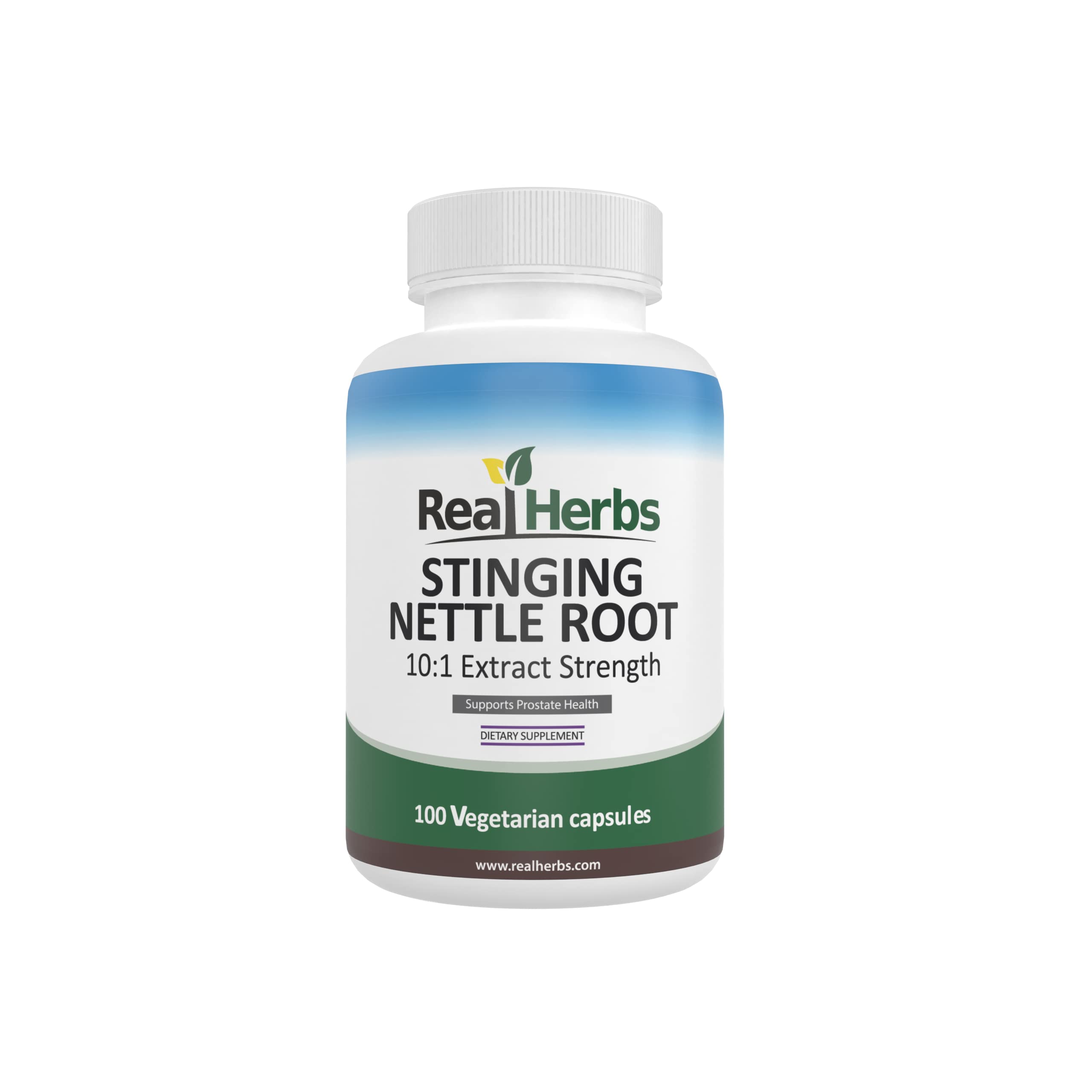
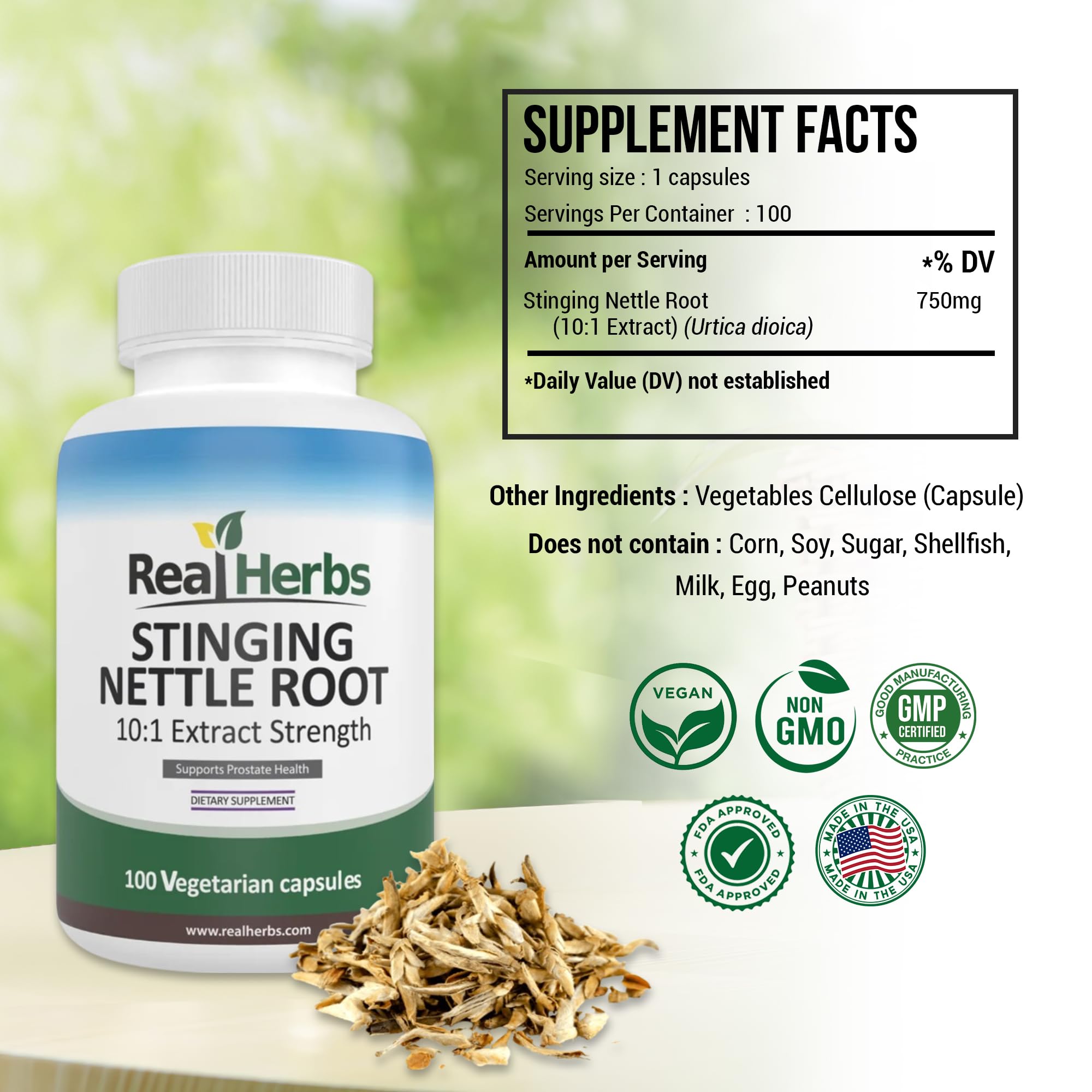
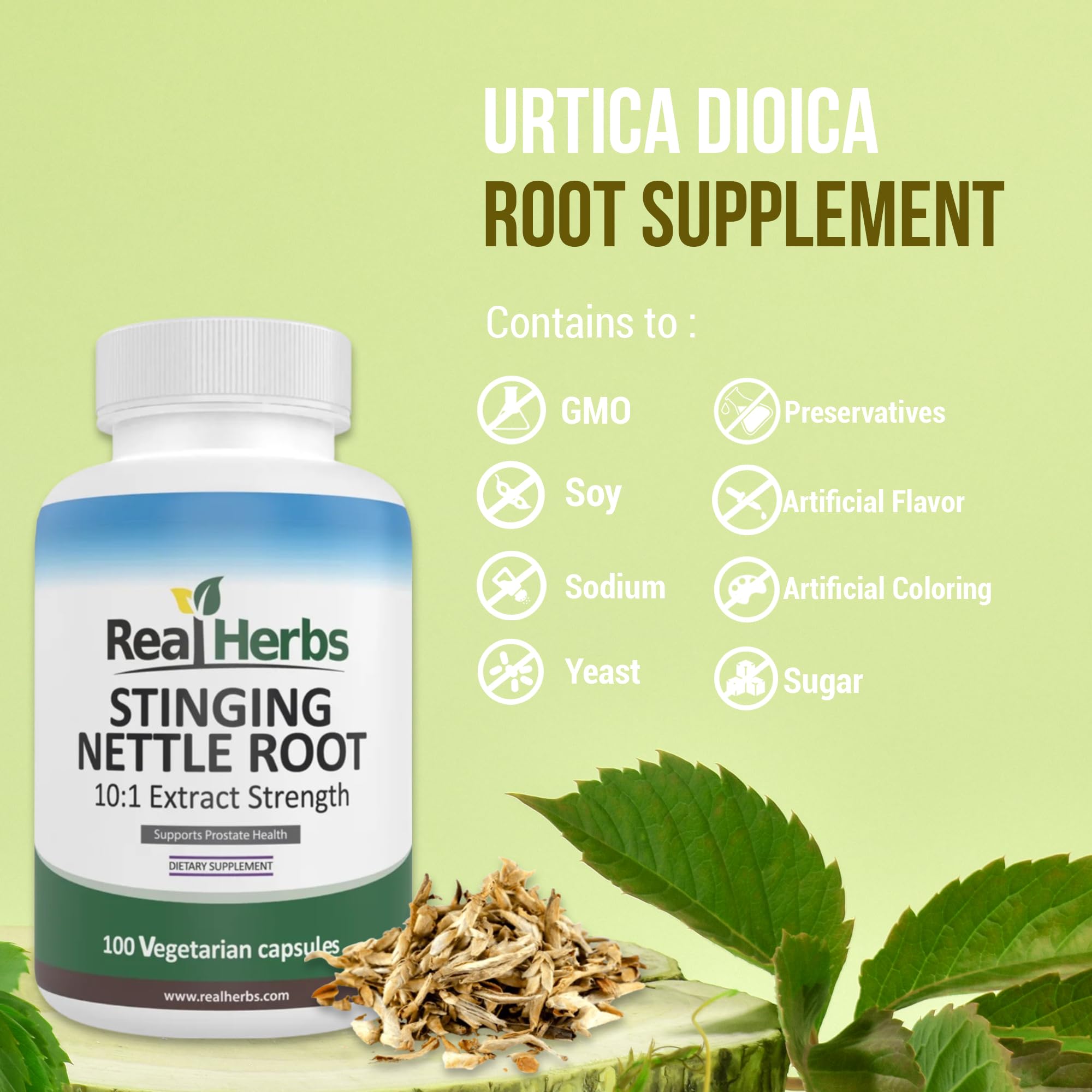
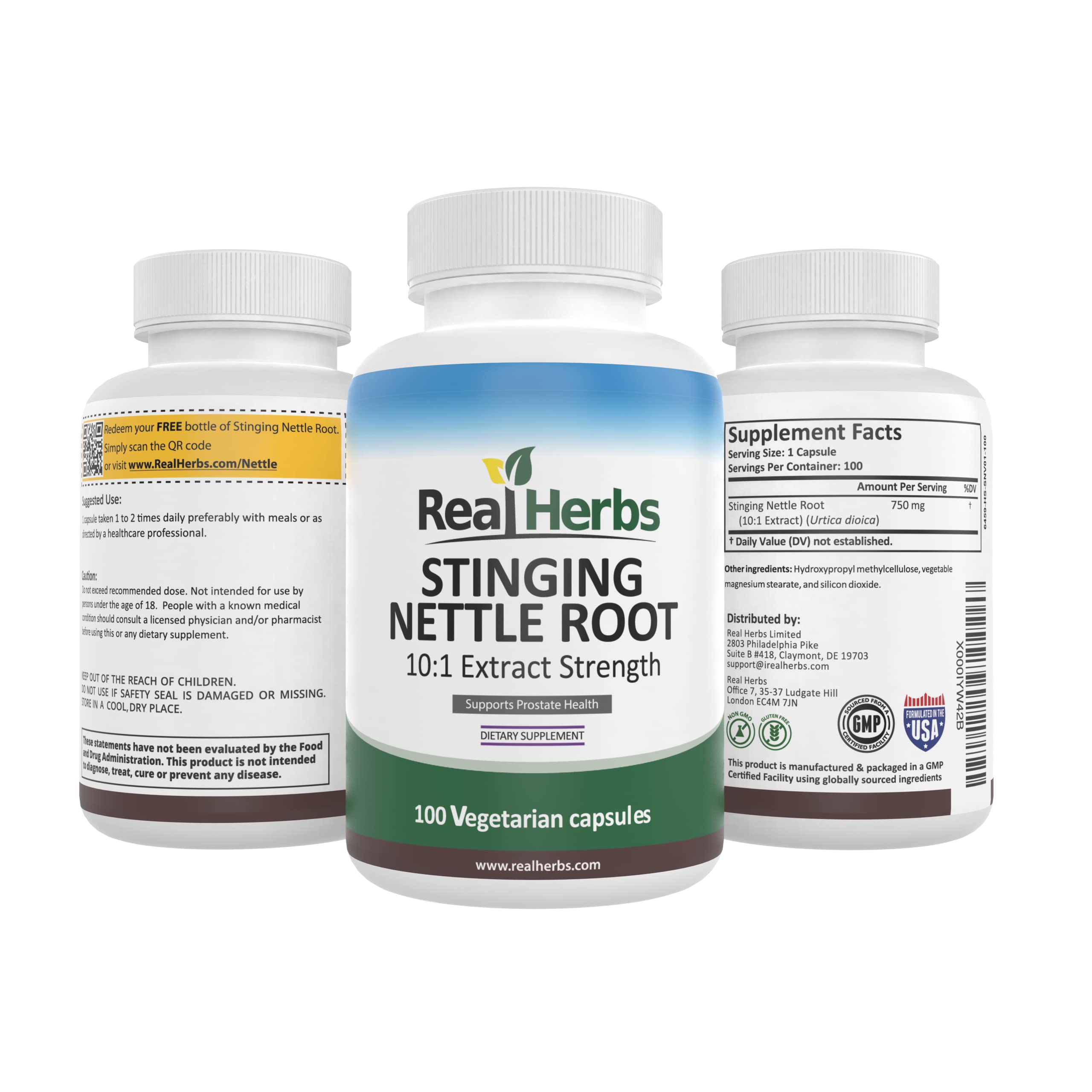
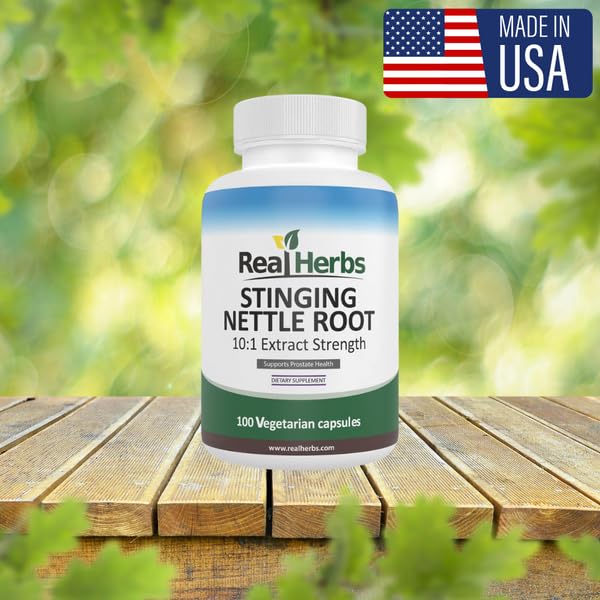
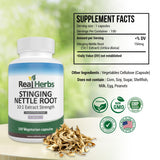
Real Herbs Stinging Nettle Root Extract: 750 mg of 10:1 root extract per capsule (about 7,500 mg dried root equivalent), 100 vegetarian capsules. Backed by our 100-Day Money-Back Guarantee. Real Herbs sells this product. The trials and the EMA documents did not test this exact product.
Related reading
- Nettle root, urinary flow and night-time urination
- Stinging nettle root for BPH: what the research shows
- Nettle root vs nettle leaf: key differences
- Nettle root side effects and who should avoid it
References
- Zhang H, Li N, Li K, Li P. Protective effect of Urtica dioica methanol extract against experimentally induced urinary calculi in rats. Mol Med Rep. 2014;10(6):3157-62. PMID 25310585 · DOI 10.3892/mmr.2014.2610
- Hajihashemi S, Ahmadi M, Chehrei A, Ghanbari F. Ameliorative effect of cotreatment with the methanolic leaf extract of Urtica dioica on acute kidney injury induced by gentamicin in rats. Avicenna J Phytomed. 2020;10(3):273-286. PMID 32523882
- Vajic UJ, Mihailovic-Stanojevic N, Karanovic D, Zivotic M, Ivanov M, Jovovic D, Grujic-Milanovic J, Miloradovic Z. Urtica dioica L. leaf extract dose-dependently modulates oxidative stress in the kidney and exerts anti-fibrotic and anti-inflammatory properties by the molecular mechanisms independent of NRF-2 signalization mirroring the effects of losartan in SHR. Int J Mol Sci. 2024;25(24):13272. PMID 39769037 · DOI 10.3390/ijms252413272
- Tahri A, Yamani S, Legssyer A, Aziz M, Mekhfi H, Bnouham M, Ziyyat A. Acute diuretic, natriuretic and hypotensive effects of a continuous perfusion of aqueous extract of Urtica dioica in the rat. J Ethnopharmacol. 2000;73(1-2):95-100. PMID 11025144 · DOI 10.1016/s0378-8741(00)00270-1
- Nirumand MC, Hajialyani M, Rahimi R, Farzaei MH, Zingue S, Nabavi SM, Bishayee A. Dietary plants for the prevention and management of kidney stones: preclinical and clinical evidence and molecular mechanisms. Int J Mol Sci. 2018;19(3):765. PMID 29518971 · DOI 10.3390/ijms19030765
- European Medicines Agency, Committee on Herbal Medicinal Products. Assessment report on Urtica dioica L.; Urtica urens L., radix. EMA/HMPC/322627/2023. Final, Revision 1, 22 January 2025. ema.europa.eu
- European Medicines Agency, Committee on Herbal Medicinal Products. Community herbal monograph on Urtica dioica L.; Urtica urens L., folium. EMA/HMPC/508015/2007. 14 January 2010. ema.europa.eu
- National Institute of Diabetes and Digestive and Kidney Diseases. Symptoms and causes of kidney stones. Accessed October 2026. niddk.nih.gov
- National Institute of Diabetes and Digestive and Kidney Diseases. Symptoms and causes of bladder infection (UTI) in adults. Accessed October 2026. niddk.nih.gov
Disclaimer: This article is for educational purposes only and is not medical advice. Talk with a qualified healthcare professional before starting any supplement, especially if you have a medical condition or take medication. These statements have not been evaluated by the Food and Drug Administration. This product is not intended to diagnose, treat, cure, or prevent any disease.