
Stinging Nettle Root for BPH: What the Research Shows
By Real Herbs Editorial Team · Published September 2025 · Updated October 2026 · 11 min read

Key takeaway: Stinging nettle root extract is a plant extract studied for urinary symptoms linked to benign prostatic hyperplasia (BPH). Several randomized trials report lower symptom scores than placebo, but results on urine flow and prostate size vary between trials, and reviewers call for larger confirmatory trials. It does not replace a doctor's diagnosis.
Stinging nettle root is the underground part of Urtica dioica, a plant used in traditional European herbal medicine and now sold as a concentrated extract for prostate and urinary support. This guide covers what human trials have found, how the extract may work, what doses were used, and where the evidence runs out.
Benign prostatic hyperplasia (BPH) is a non-cancerous enlargement of the prostate that affects 5% to 6% of men aged 40 to 64 and 29% to 33% of men aged 65 and older ([1]). In several European countries, plant extracts are widely used for the symptoms, and reviewers have described nettle root and saw palmetto as the two most popular ones ([2], PMID 11509966). Disclosure: the author of that review works for a herbal medicine manufacturer (see reference 2).
What BPH is and when to see a doctor
BPH is a growth of the prostate gland that is not caused by cancer. As the gland enlarges it can squeeze the urethra, the tube that carries urine out of the bladder. Common symptoms include trouble starting a urine stream or emptying the bladder, a weak or interrupted stream, dribbling at the end of urination, nocturia (waking at night to urinate), urgency, frequency and pain during urination ([1]).
Get urgent care if you cannot urinate at all, see blood in your urine, have painful, frequent and urgent urination with fever and chills, or feel great pain in your lower abdomen ([1]). Discuss any urinary symptoms with a doctor, because other conditions, including prostate cancer, can cause the same symptoms ([1]).

What human trials found on nettle root for BPH
The table lists every human trial cited in this article. IPSS is the International Prostate Symptom Score, where lower means fewer symptoms.
Swipe sideways to see all columns.
| Trial | Men | Product tested | Length | Result |
|---|---|---|---|---|
| Safarinejad 2005 | 620 | Urtica dioica extract | 6 months controlled, followed to 18 months | IPSS 19.8 to 11.8 (nettle) vs 19.2 to 17.7 (placebo) |
| Schneider 2004 | 246 | Nettle root extract, 459 mg dry extract | 12 months | IPSS 18.7 to 13.0 vs 18.5 to 13.8 |
| Karami 2020 | 60 | Nettle root extract, 450 mg a day | 12 weeks | Moderate effect on IPSS (abstract gives no scores) |
| Lopatkin 2005 | 257 | Saw palmetto 160 mg + nettle root 120 mg, twice daily | 24 weeks | IPSS fell 6 points vs 4 with placebo |
| Sökeland 1997 | 543 | Same combination vs finasteride | 48 weeks | IPSS 11.3 to 6.5 vs 11.8 to 6.2 with finasteride |
| Melo 2002 | 49 | Pygeum 25 mg + nettle 300 mg | 6 months | IPSS drop 21.6% vs 19.7% with placebo (no difference) |

Nettle root alone
Human trial The largest trial enrolled 620 men with BPH-related urinary symptoms. On the IPSS, the nettle group fell from 19.8 to 11.8 and the placebo group from 19.2 to 17.7 (P = 0.002). Peak urine flow rose by 8.2 mL/s with nettle and 3.4 mL/s with placebo, leftover urine after voiding fell from 73 to 36 mL, and prostate volume on ultrasound fell from 40.1 to 36.3 cc, while PSA and testosterone did not change. Only the first 6 months were placebo-controlled: placebo patients were then switched to nettle, so later results are uncontrolled. The author wrote that more trials should confirm the results before concluding that nettle is effective ([3], PMID 16635963). It is the largest trial, and its results have not yet been repeated at this scale. PubMed lists some other papers by the same author as retracted; this paper is not marked as retracted.
Human trial A 12-month trial in 246 men tested a nettle root extract (459 mg dry extract). IPSS fell from 18.7 to 13.0 with the extract versus 18.5 to 13.8 with placebo (P = 0.0233), a gap of 0.8 points. The gains in urine flow and leftover urine were similar to placebo, and the authors noted that a strong increase in flow or drop in residual urine should not be expected ([4], PMID 15045190).
Human trial A 12-week trial in 60 men gave 450 mg a day of a nettle root extract or placebo. The extract had a moderate effect on IPSS and shifted blood markers of inflammation and oxidative stress (hs-CRP, MDA, SOD). No side effects were seen. With only 60 men, this is early evidence ([5], PMID 32981268).
Combinations with saw palmetto or pygeum
Combination extract A trial in 257 men tested a capsule with 160 mg saw palmetto fruit extract and 120 mg nettle root extract, taken twice daily for 24 weeks. IPSS fell by 6 points versus 4 with placebo (P = 0.003, one-tailed) ([6], PMID 15928959).
Combination extract In a 48-week study of 543 men, the same combination was compared with finasteride. Urine flow rose by 1.9 mL/s with the combination and 2.4 mL/s with finasteride, and IPSS fell from 11.3 to 6.5 versus 11.8 to 6.2. The authors reported fewer adverse events with the herbal combination ([7], PMID 9340898).
Combination extract Not every combination trial was positive. A 6-month trial of 49 men tested 25 mg pygeum with 300 mg nettle extract and found results similar to placebo (IPSS drop of 21.6% versus 19.7%, P = 0.928) ([8], PMID 15748367). Because these products combine herbs, they do not isolate the effect of nettle root.
What reviews conclude
Review A systematic review of 44 phytotherapy studies, using literature through 1997, found no convincing evidence for nettle root alone at that time and called for longer trials with standardized preparations ([9], PMID 11276294). A later review of the nettle root literature concluded that a small number of randomized trials indicate a proprietary methanolic extract improves BPH complaints, but that the size and significance of the effect remain to be confirmed. It rated the risk of adverse events as very low ([10], PMID 17509841).
How nettle root may work on the prostate
Nobody has established the mechanism. A comprehensive review concluded that SHBG (the protein that carries sex hormones in blood), aromatase, epidermal growth factor and prostate membrane receptors are likely involved, and that 5-alpha-reductase (the target of finasteride) and androgen receptors are less likely to be involved ([10], PMID 17509841). The findings below are from the lab or from animals, so they show possible mechanisms, not benefit in men.
Animal study In a mouse model where prostate tissue was implanted to induce growth, a 20% methanolic root extract was the most effective of five extracts tested, cutting induced growth by 51.4% ([11], PMID 9270373).
Cell study A 20% methanolic root extract slowed growth of a prostate cancer cell line (LNCaP) by up to 30% on day 5 at 10-6 mg/mL and left prostate stromal cells unaffected ([12], PMID 10705733). This is a lab model only, and it says nothing about treating prostate cancer in people.
Cell study An aqueous root extract blocked the binding of SHBG to its receptor on human prostate membranes, while an alcoholic extract did not ([13], PMID 7700987). Separately, lignans from nettle root (some made semisynthetically) and their gut metabolites bound to SHBG in a test-tube assay ([14], PMID 9434605).
Cell study Organic-solvent root extracts inhibited the Na+,K+-ATPase enzyme in prostate tissue from one BPH patient by 27.6% to 81.5% at 0.1 mg/mL, and steroid compounds from the root did so by 23.0% to 67.0% ([15], PMID 7510891).
Root or leaf? Every study above used a root extract. Nettle leaf is studied for different goals, such as seasonal allergies and joints, and its results should not be read across to the prostate.
Nettle root, saw palmetto and prescription medicines
Saw palmetto is the herb most often compared with nettle root. A Cochrane update of 17 trials (2,008 men) found saw palmetto alone no better than placebo for urinary symptoms, and one trial of 369 men found the same even at triple the usual dose ([16], PMID 22551330; [17], PMID 21954478).
Swipe sideways to see all columns.
| Nettle root alone | Saw palmetto alone | Saw palmetto + nettle root | |
|---|---|---|---|
| Trials in this article | 3 trials (620, 246 and 60 men) | Cochrane update of 17 trials; one 369-man dose-escalation trial | 2 trials (257 and 543 men), plus a pygeum combination (49 men) |
| Symptom score versus placebo | Lower in the 620-man trial (5.9-point gap) and the 246-man trial (0.8-point gap) | No better than placebo, even at triple dose | Lower by 6 vs 4 points at 24 weeks; similar to finasteride at 48 weeks |
| Longest controlled trial | 12 months | 72 weeks | 48 weeks |
| Things to note | Fewer trials; flow results vary; largest trial awaiting replication | Different extracts and trial quality; some short-term trials of one extract (Permixon) did reduce night-time voids | Effect of each ingredient not separated |
Prescription alpha-blockers (such as tamsulosin) and 5-alpha-reductase inhibitors (such as finasteride) are not covered by this table. One 543-man trial compared the saw palmetto and nettle combination with finasteride ([7], PMID 9340898), and a re-analysis of four trials found no difference in night-time urination between the combination and either tamsulosin or finasteride ([18], PMID 24938176). Nettle root alone has not been compared head to head with these medicines in the studies cited here. See our full comparison: nettle root vs. saw palmetto for BPH.
Dose, forms and how long to take it
No single dose is established. Of the three trials of nettle root alone, the two that report a dose in their abstracts used 450 mg a day of root extract and a 459 mg dry extract (the largest trial's abstract gives none), and a 2012 European Medicines Agency monograph listed several traditional-use doses that depend on the extract type ([19]). The monograph has since been marked superseded, so use it as a reference point and not a prescription.
Swipe sideways to see all columns.
| Form listed by the EMA (2012) | Adult dose |
|---|---|
| Dry extract, 20% methanol (7.1 to 14.3:1) | 160 mg three times daily, or 460 mg once daily |
| Dry extract, 20% ethanol (6.7 to 8.3:1) | 240 mg three times daily |
| Dry extract, 70% ethanol (12 to 16:1) | 150 to 190 mg twice daily |
| Liquid extract (1:1, 30% ethanol) | Up to 5 mL a day, in 3 or 4 doses |
| Herbal tea (decoction) | 1.5 g of cut root, 3 to 4 times daily |
For comparison, the trials used 450 mg a day of a root extract ([5], PMID 32981268), a 459 mg dry extract ([4], PMID 15045190) and 120 mg of nettle root extract per capsule, twice daily, inside the saw palmetto combination ([6], PMID 15928959). The monograph says long-term use is possible ([19]). The controlled trials above ran from 12 weeks to 12 months, and the largest followed some patients for 18 months ([3], PMID 16635963). No trial cited here tested nettle tea.
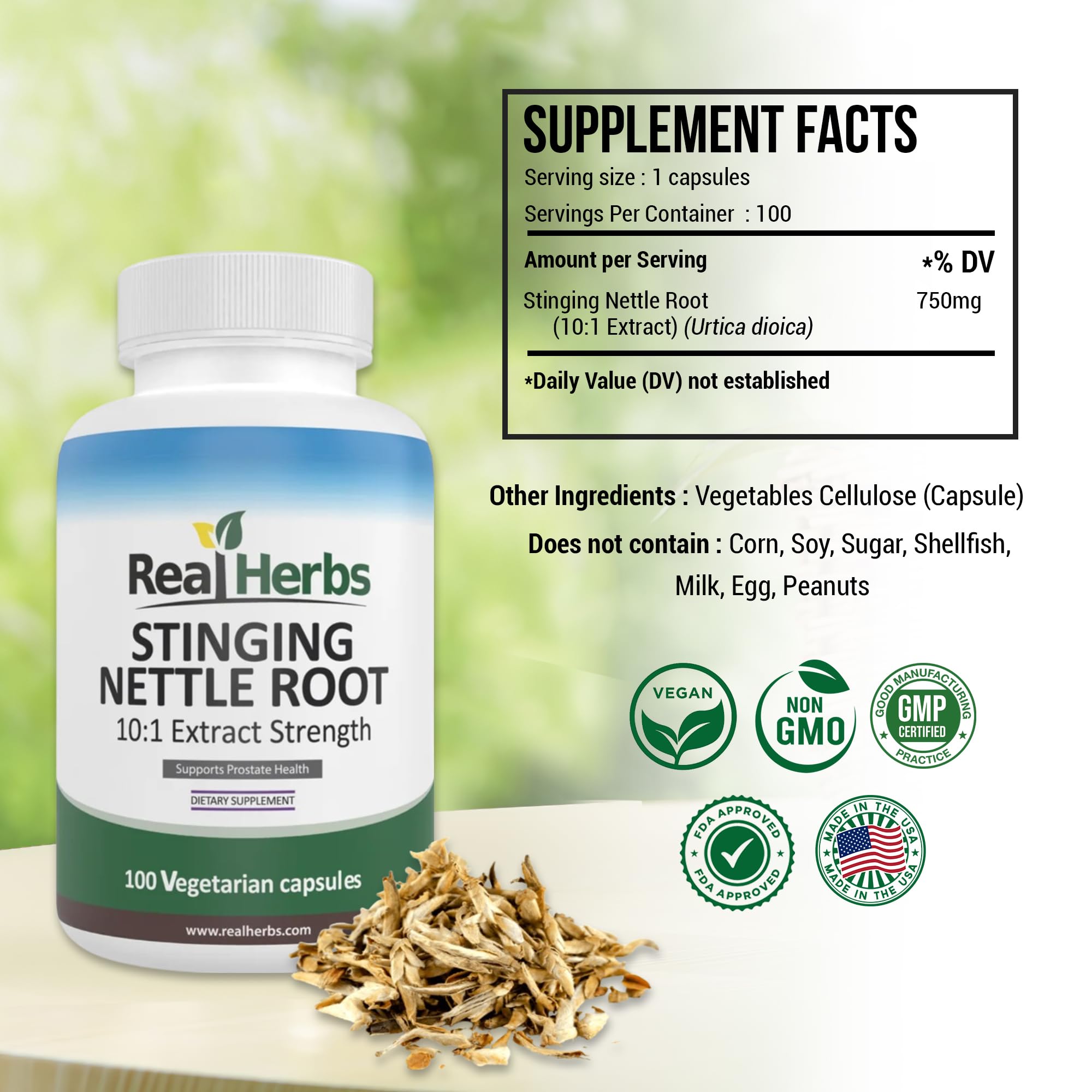
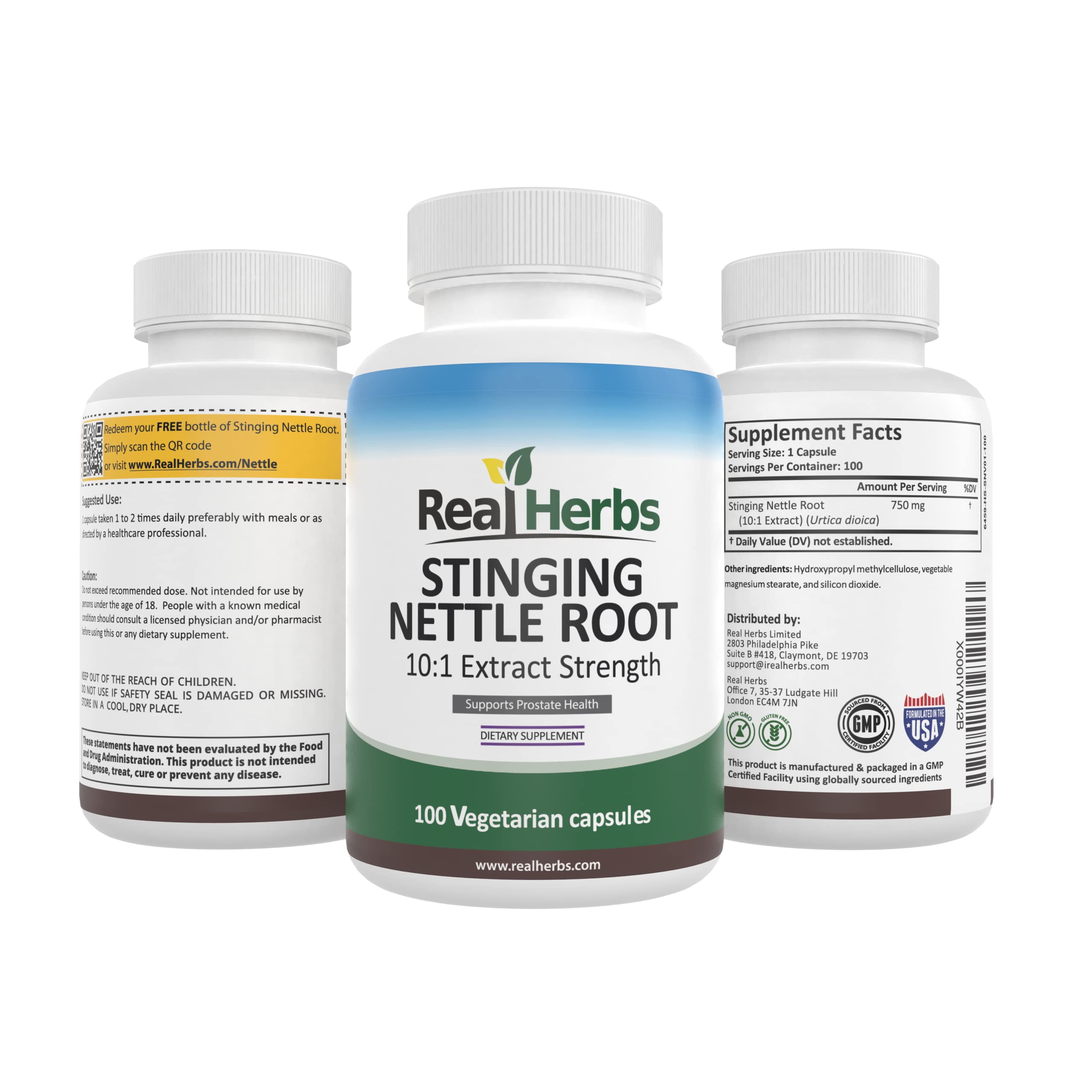
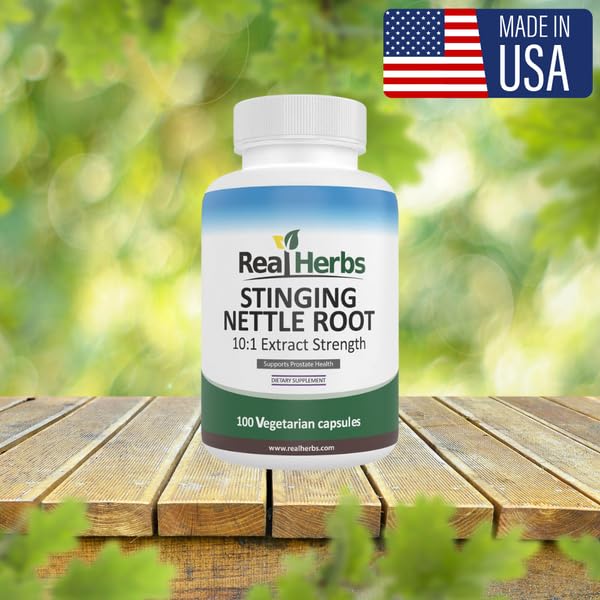
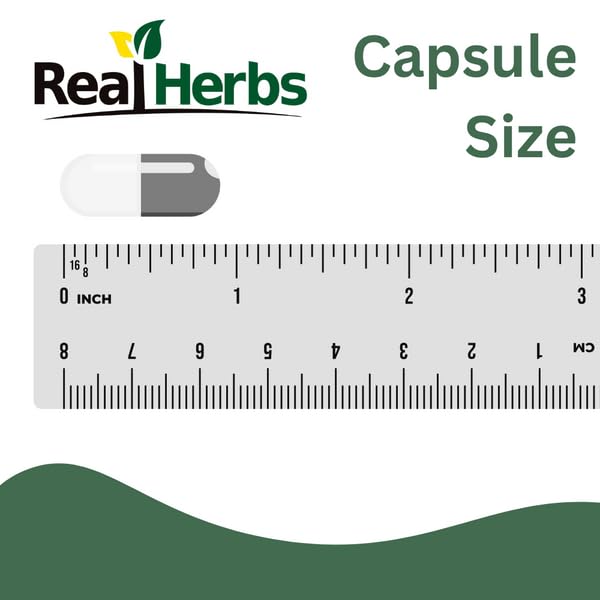
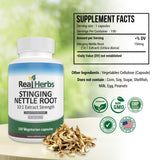
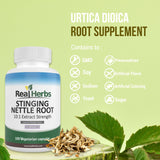
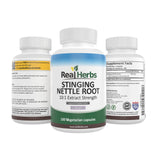
How to read a label. An extract ratio such as 10:1 means roughly 10 parts of dried root were used to make 1 part of extract. Our capsule contains 750 mg of 10:1 root extract, which is about 7,500 mg of dried root equivalent. Because extracts differ in ratio and solvent, milligram figures from different products and studies are not directly comparable, and neither the trials nor the EMA monograph tested this exact product. Talk to your doctor or pharmacist about dose, especially if you take other medicines.
Safety and who should check with a doctor first
Reviewers describe the risk of adverse events with nettle root as very low ([10], PMID 17509841). The EMA monograph lists possible stomach complaints (nausea, heartburn, a feeling of fullness, gas, diarrhoea) and allergic reactions (itching, rash, hives), reports no interactions, and says nettle root has no relevant use under 18 ([19]). In the 12-month trial, adverse events were fewer with the extract than with placebo ([4], PMID 15045190).
See a doctor first to rule out serious conditions, and again if symptoms worsen or you develop fever, spasms, blood in the urine, painful urination or trouble passing urine ([19]). In the largest trial, PSA did not change ([3], PMID 16635963), so symptom relief on nettle says nothing about cancer: keep your regular prostate checks. Because the cited trials did not test nettle root with other drugs, ask your doctor first if you take medication for blood pressure, diabetes or blood thinning. See the full guide: who should avoid stinging nettle root.
Frequently asked questions
Does stinging nettle root shrink the prostate?
Results vary. One 620-man trial measured a fall from 40.1 to 36.3 cc, but the other trials above did not report a clear size change, and reviewers say the size of any effect is still to be confirmed.
How long does stinging nettle root take to work for BPH?
The controlled trials above measured results after 12 weeks to 12 months, so any benefit is judged over months, not days. Review your symptoms with your doctor rather than relying on a short trial period.
What dose of nettle root was used in BPH studies?
Two of the three nettle-alone trials report a dose in their abstracts, 450 mg a day of root extract and a 459 mg dry extract, and the EMA monograph lists several dry-extract regimens depending on the extract type, for example 460 mg once daily of a methanolic extract. Extracts differ in ratio and solvent, so the figures are not directly comparable. See the dose section above.
Is nettle root better than saw palmetto for BPH?
Both have limited evidence on their own. A Cochrane update found saw palmetto alone no better than placebo, while nettle root alone has fewer, smaller trials whose flow results vary. Read the full comparison.
Does nettle root block DHT like finasteride?
Probably not. A review of the research concluded that 5-alpha-reductase, the enzyme finasteride blocks, is less likely to be involved in the anti-prostatic effect of nettle root.
Can nettle root help with night-time urination?
Only the combination product has been studied for this. A re-analysis of four trials (922 men) found that, in the two placebo-controlled trials pooled, the saw palmetto and nettle root combination cut night-time voids by 0.8 versus 0.6 with placebo, and it did not differ from tamsulosin or finasteride. Nettle root alone was not tested for nocturia in the trials cited here.
Can nettle root hide prostate cancer or affect PSA?
Nettle root has not been shown to treat or screen for prostate cancer. PSA did not change in the largest trial, and urinary symptoms can also come from cancer, so see a doctor before starting and keep your regular checks.
Can I take nettle root with finasteride or tamsulosin?
The EMA monograph reports no interactions, but none of the trials cited here tested nettle root alone together with these drugs. Ask your doctor or pharmacist before combining them.
The bottom line
Several randomized trials suggest nettle root extract may lower BPH symptom scores, and the safety record in those trials is good. The trials are few and mostly small, use different extracts and report different results on urine flow and prostate size. Treat it as a possible add-on to a proper diagnosis and medical advice, not a replacement for either.
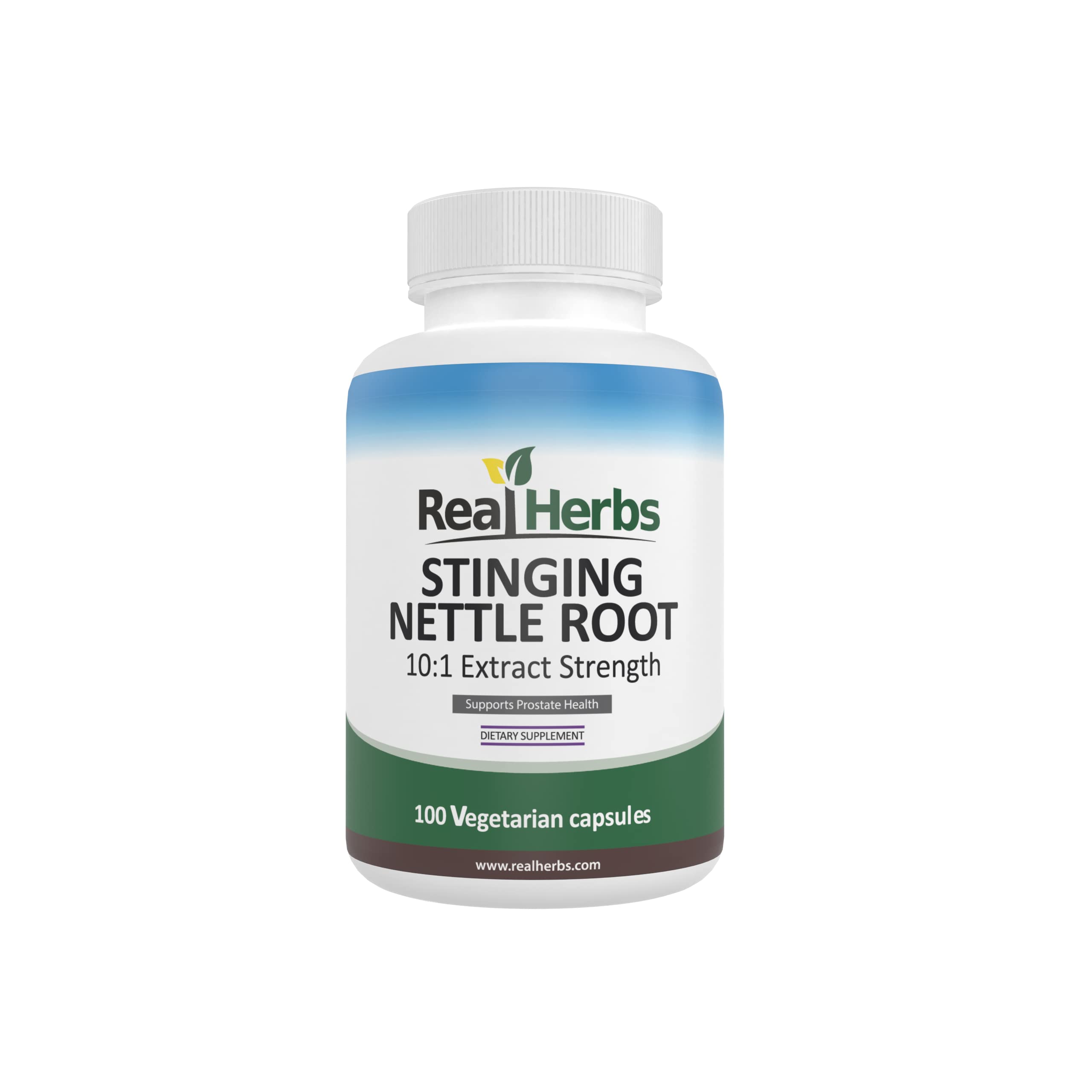
Real Herbs Stinging Nettle Root Extract: 750 mg of 10:1 root extract per capsule (about 7,500 mg dried root equivalent), 100 vegetarian capsules. Backed by our 100-Day Money-Back Guarantee. Real Herbs sells this product.
Related reading
- Stinging nettle root and urinary flow
- Nettle root vs. saw palmetto for BPH
- The lignan connection: nettle root and the prostate
References
- National Institute of Diabetes and Digestive and Kidney Diseases. Prostate enlargement (benign prostatic hyperplasia). Page reviewed June 2024. niddk.nih.gov
- Koch E. Extracts from fruits of saw palmetto (Sabal serrulata) and roots of stinging nettle (Urtica dioica): viable alternatives in the medical treatment of benign prostatic hyperplasia and associated lower urinary tracts symptoms. Planta Med. 2001;67(6):489-500. PMID 11509966 (listed author affiliation: Dr. Willmar Schwabe Arzneimittel GmbH, a herbal medicine manufacturer) · DOI 10.1055/s-2001-16496
- Safarinejad MR. Urtica dioica for treatment of benign prostatic hyperplasia: a prospective, randomized, double-blind, placebo-controlled, crossover study. J Herb Pharmacother. 2005;5(4):1-11. PMID 16635963
- Schneider T, Rübben H. Stinging nettle root extract (Bazoton-uno) in long term treatment of benign prostatic syndrome (BPS). Results of a randomized, double-blind, placebo controlled multicenter study after 12 months (in German). Urologe A. 2004;43(3):302-6. PMID 15045190 · DOI 10.1007/s00120-004-0532-7
- Akbar Karami A, Sheikhsoleimani M, Reza Memarzadeh M, Haddadi E, Bakhshpour M, Mohammadi N, et al. Urtica Dioica Root Extract on Clinical and Biochemical Parameters in Patients with Benign Prostatic Hyperplasia, Randomized Controlled Trial. Pak J Biol Sci. 2020;23(10):1338-1344. PMID 32981268 · DOI 10.3923/pjbs.2020.1338.1344
- Lopatkin N, Sivkov A, Walther C, Schläfke S, Medvedev A, Avdeichuk J, et al. Long-term efficacy and safety of a combination of sabal and urtica extract for lower urinary tract symptoms--a placebo-controlled, double-blind, multicenter trial. World J Urol. 2005;23(2):139-46. PMID 15928959 · DOI 10.1007/s00345-005-0501-9
- Sökeland J, Albrecht J. Combination of Sabal and Urtica extract vs. finasteride in benign prostatic hyperplasia (Aiken stages I to II). Comparison of therapeutic effectiveness in a one year double-blind study (in German). Urologe A. 1997;36(4):327-33. PMID 9340898 · DOI 10.1007/s001200050106
- Melo EA, Bertero EB, Rios LA, Mattos D. Evaluating the efficiency of a combination of Pygeum africanum and stinging nettle (Urtica dioica) extracts in treating benign prostatic hyperplasia (BPH): double-blind, randomized, placebo controlled trial. Int Braz J Urol. 2002;28(5):418-25. PMID 15748367
- Wilt TJ, Ishani A, Rutks I, MacDonald R. Phytotherapy for benign prostatic hyperplasia. Public Health Nutr. 2000;3(4A):459-72. PMID 11276294 · DOI 10.1017/s1368980000000549
- Chrubasik JE, Roufogalis BD, Wagner H, Chrubasik S. A comprehensive review on the stinging nettle effect and efficacy profiles. Part II: urticae radix. Phytomedicine. 2007;14(7-8):568-79. PMID 17509841 · DOI 10.1016/j.phymed.2007.03.014
- Lichius JJ, Muth C. The inhibiting effects of Urtica dioica root extracts on experimentally induced prostatic hyperplasia in the mouse. Planta Med. 1997;63(4):307-10. PMID 9270373 · DOI 10.1055/s-2006-957688
- Konrad L, Müller HH, Lenz C, Laubinger H, Aumüller G, Lichius JJ. Antiproliferative effect on human prostate cancer cells by a stinging nettle root (Urtica dioica) extract. Planta Med. 2000;66(1):44-7. PMID 10705733 · DOI 10.1055/s-2000-11117
- Hryb DJ, Khan MS, Romas NA, Rosner W. The effect of extracts of the roots of the stinging nettle (Urtica dioica) on the interaction of SHBG with its receptor on human prostatic membranes. Planta Med. 1995;61(1):31-2. PMID 7700987 · DOI 10.1055/s-2006-957993
- Schöttner M, Gansser D, Spiteller G. Lignans from the roots of Urtica dioica and their metabolites bind to human sex hormone binding globulin (SHBG). Planta Med. 1997;63(6):529-32. PMID 9434605 · DOI 10.1055/s-2006-957756
- Hirano T, Homma M, Oka K. Effects of stinging nettle root extracts and their steroidal components on the Na+,K(+)-ATPase of the benign prostatic hyperplasia. Planta Med. 1994;60(1):30-3. PMID 7510891 · DOI 10.1055/s-2006-959402
- MacDonald R, Tacklind JW, Rutks I, Wilt TJ. Serenoa repens monotherapy for benign prostatic hyperplasia (BPH): an updated Cochrane systematic review. BJU Int. 2012;109(12):1756-61. PMID 22551330 · DOI 10.1111/j.1464-410X.2012.11172.x
- Barry MJ, Meleth S, Lee JY, Kreder KJ, Avins AL, Nickel JC, et al. Effect of increasing doses of saw palmetto extract on lower urinary tract symptoms: a randomized trial. JAMA. 2011;306(12):1344-51. PMID 21954478 · DOI 10.1001/jama.2011.1364
- Oelke M, Berges R, Schläfke S, Burkart M. Fixed-dose combination PRO 160/120 of sabal and urtica extracts improves nocturia in men with LUTS suggestive of BPH: re-evaluation of four controlled clinical studies. World J Urol. 2014;32(5):1149-54. PMID 24938176 · DOI 10.1007/s00345-014-1338-x
- European Medicines Agency, Committee on Herbal Medicinal Products. Community herbal monograph on Urtica dioica L., Urtica urens L., their hybrids or their mixtures, radix (nettle root). EMA/HMPC/461160/2008. Adopted 24 September 2012; marked superseded by the EMA. ema.europa.eu
Disclaimer: This article is for educational purposes only and is not medical advice. Talk with a qualified healthcare professional before starting any supplement, especially if you have a medical condition or take medication. These statements have not been evaluated by the Food and Drug Administration. This product is not intended to diagnose, treat, cure, or prevent any disease.