Stinging Nettle Root Dosage: An Evidence-Based, Honest Guide
By Jessica Johnson, Herbal Science Researcher at Real Herbs | Updated: July 2026 | Reading time: 9 minutes

Key takeaway: Clinical trials on stinging nettle root for BPH have generally used 300-600mg of standardized extract daily. Higher doses (up to about 756mg) appear in the research too, but it's worth knowing this specifically corresponds to a different extraction method (ethanol-based, versus the more common methanol-based extract), not simply "more" of the same product. Always match your dose to what's actually on your product's label.
Understanding Stinging Nettle Root Dosage
This guide covers the real, accurately-sourced dosages used in clinical research on stinging nettle root, and what that means for choosing an appropriate dose for your own use.
Understanding Dosage: Why It Matters
The "right" dosage for any herbal supplement depends on the plant part used, the preparation form, the concentration of active compounds, and the condition being addressed. For nettle root, consistency and long-term use are generally more important than a single high dose for chronic conditions like BPH.
Common and Researched Dosages for Stinging Nettle Root
Nettle root is primarily studied for benign prostatic hyperplasia (BPH) and related urinary symptoms.
- For BPH, the standard clinical range: Clinical trials evaluating nettle root for BPH have generally used doses in the 300-600mg range daily, often divided into two doses (PMID 16635963, PMID 15045190).
- Higher-dose extracts, a different extraction method: A comprehensive review of nettle root research found that empirical use also includes 378-756mg daily of dried extract, but specifically using a different extraction ratio and solvent (DER 12-16:1, 70% ethanol) than the more common 300-600mg range (DER 7-14:1, 20% methanol solvent) (Chrubasik JE, Roufogalis BD, Wagner H, Chrubasik S. Phytomedicine. 2007 Aug;14(7-8):568-79. PMID 17509841). This is a meaningfully different point: doses in the 750mg range aren't simply "more" of a standard extract, they reflect a specific, differently-processed preparation.
- For allergic rhinitis, leaf context: While nettle leaf is more commonly used for allergies, a study on freeze-dried Urtica dioica (including leaf material) used doses around 300mg daily (PMID 2192379).
- For menopausal hot flashes: A clinical trial used 450mg daily of Urtica dioica for 7 weeks, comparing it to placebo and acupuncture (PMID 31126551).
- For metabolic syndrome context: A review of nettle's role in metabolic syndrome discusses dosages across various studies, generally in the 300-600mg range (Samakar B, Mehri S, Hosseinzadeh H. Iran J Basic Med Sci. 2022 May;25(5):543-553. PMID 35911652).
Considering Doses of 750mg and Beyond
A dosage of around 750mg of stinging nettle root extract per day falls within the higher end of what's been explored in research, specifically corresponding to the ethanol-extracted preparation described above.
- Concentration matters more than the number alone: The actual amount of active compounds delivered depends heavily on whether a product is raw powdered root or a concentrated, standardized extract (such as 4:1 or 10:1). A 750mg dose of a highly concentrated extract is significantly more potent than 750mg of raw powdered root. Always check the standardization and extraction method on the product label, since the research context differs by preparation type.
- Increased side effect risk: Higher doses may increase the likelihood of mild side effects like gastrointestinal upset or increased urination (LiverTox).
Maximizing Benefits and Ensuring Safety
- Start low, go slow: If new to nettle root, begin with a lower dose to assess tolerance before increasing, if advised by a professional.
- Follow product labels: Always follow the manufacturer's specific instructions, since formulations and concentrations vary.
- Consistency is key: For chronic conditions like BPH, consistent daily intake over months matters more than sporadic high doses.
- Take with food: Helps minimize any mild gastrointestinal discomfort.
- Hydration: Given nettle's diuretic properties, maintain adequate fluid intake throughout the day.
- Consult a healthcare professional: This matters most at higher doses or with existing medical conditions, medications (particularly blood thinners, blood pressure drugs, or diabetes medications), or pregnancy/breastfeeding.
Frequently Asked Questions
Is 750mg of nettle root too much?
Not necessarily, it falls within the higher end of researched doses, but specifically for a differently-extracted preparation (ethanol-based) than the more common 300-600mg range. Check what extraction method and concentration your specific product uses rather than assuming all 750mg products are equivalent.
Do I need a higher dose for better results?
Not necessarily. Most clinical trial evidence for BPH used the 300-600mg range. A higher dose reflects a different, specific preparation rather than a simple "more is better" upgrade.
Conclusion: Informed Dosing for Optimal Results
Stinging nettle root is well-researched, with the clearest clinical evidence for BPH using 300-600mg daily. Doses up to around 750mg do appear in the research, but specifically for a differently-extracted preparation, not simply a larger amount of the standard extract. Optimal dosing depends on your specific product's concentration and extraction method, individual response, and professional guidance, always start conservatively and prioritize consistency over maximizing dose.
Explore Real Herbs Stinging Nettle Root
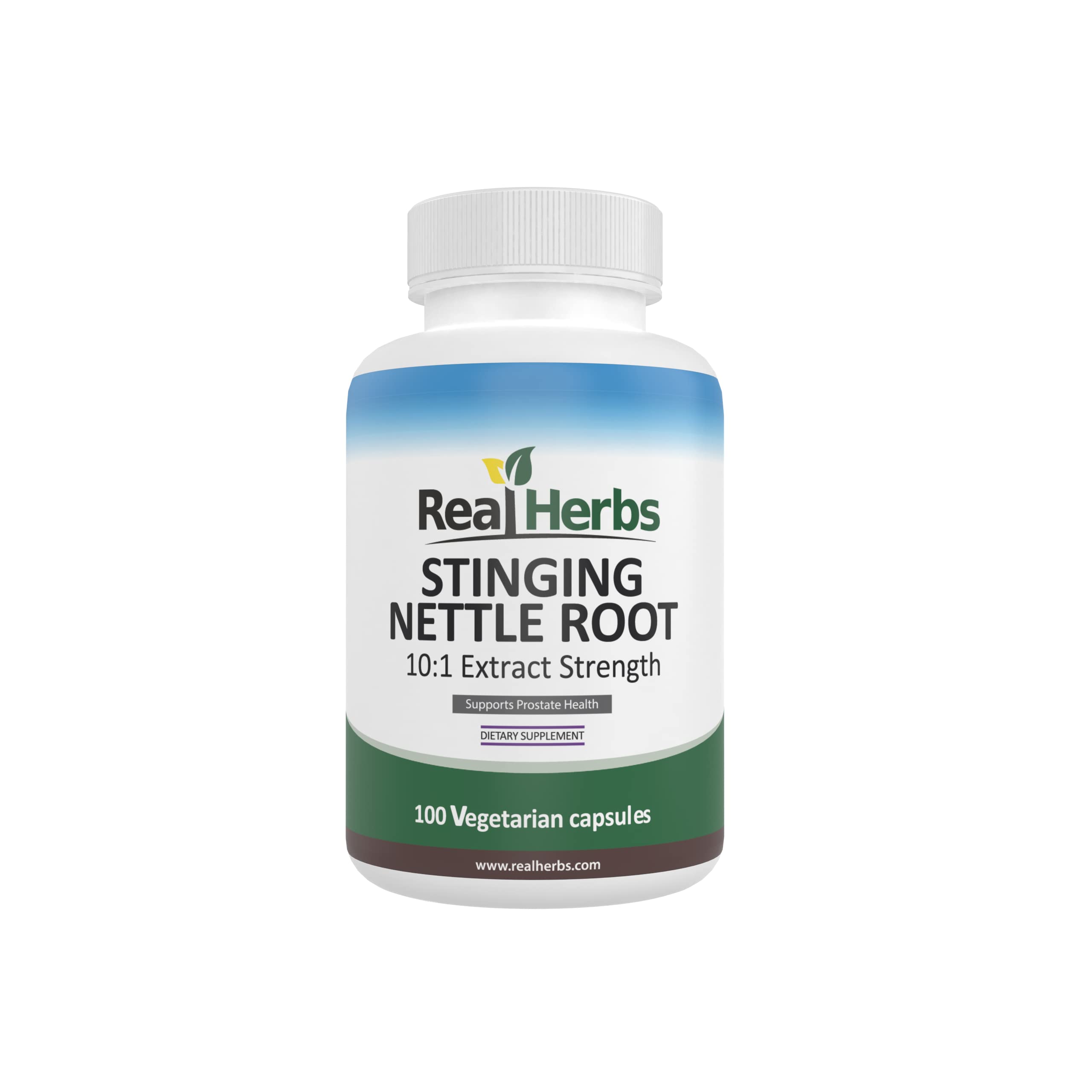
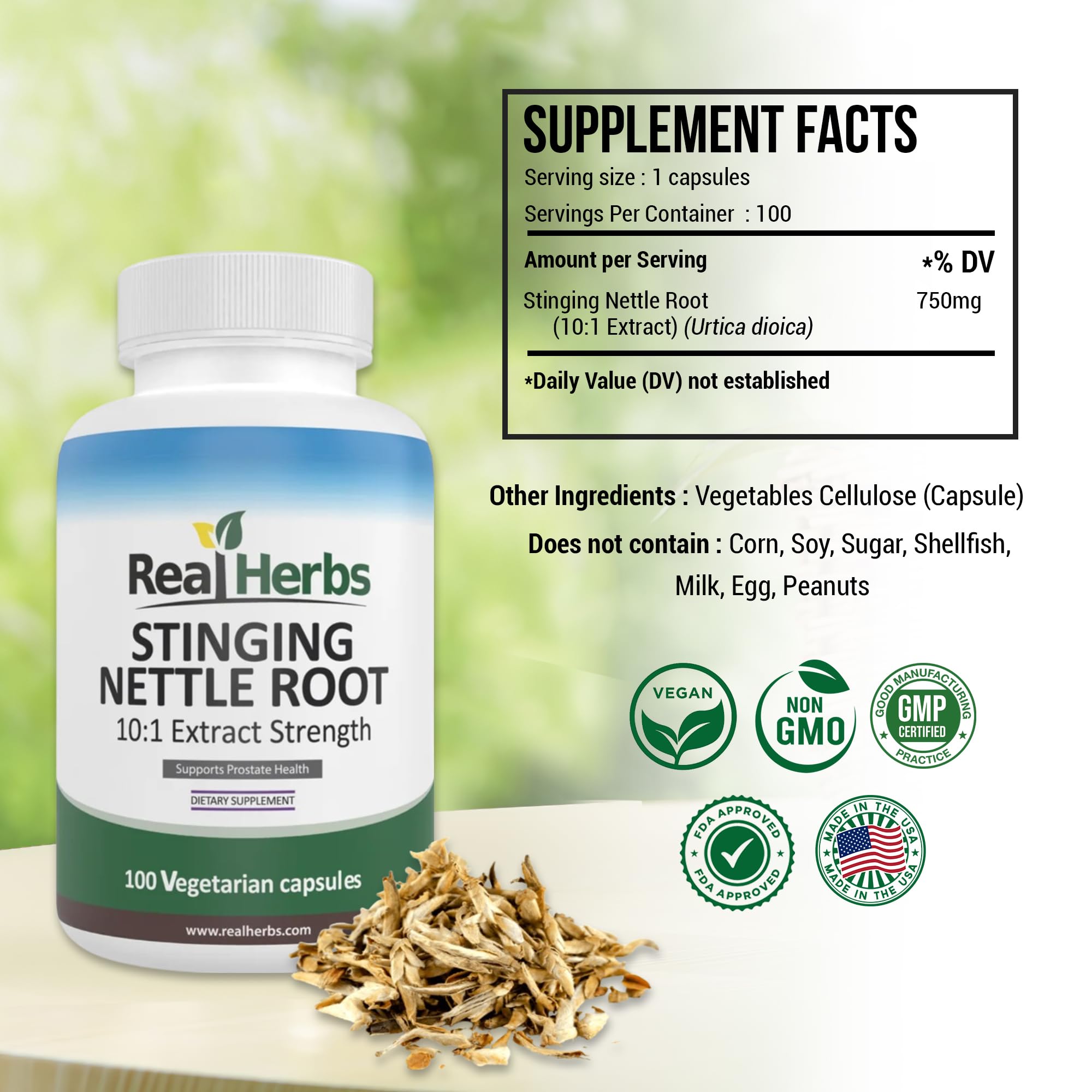
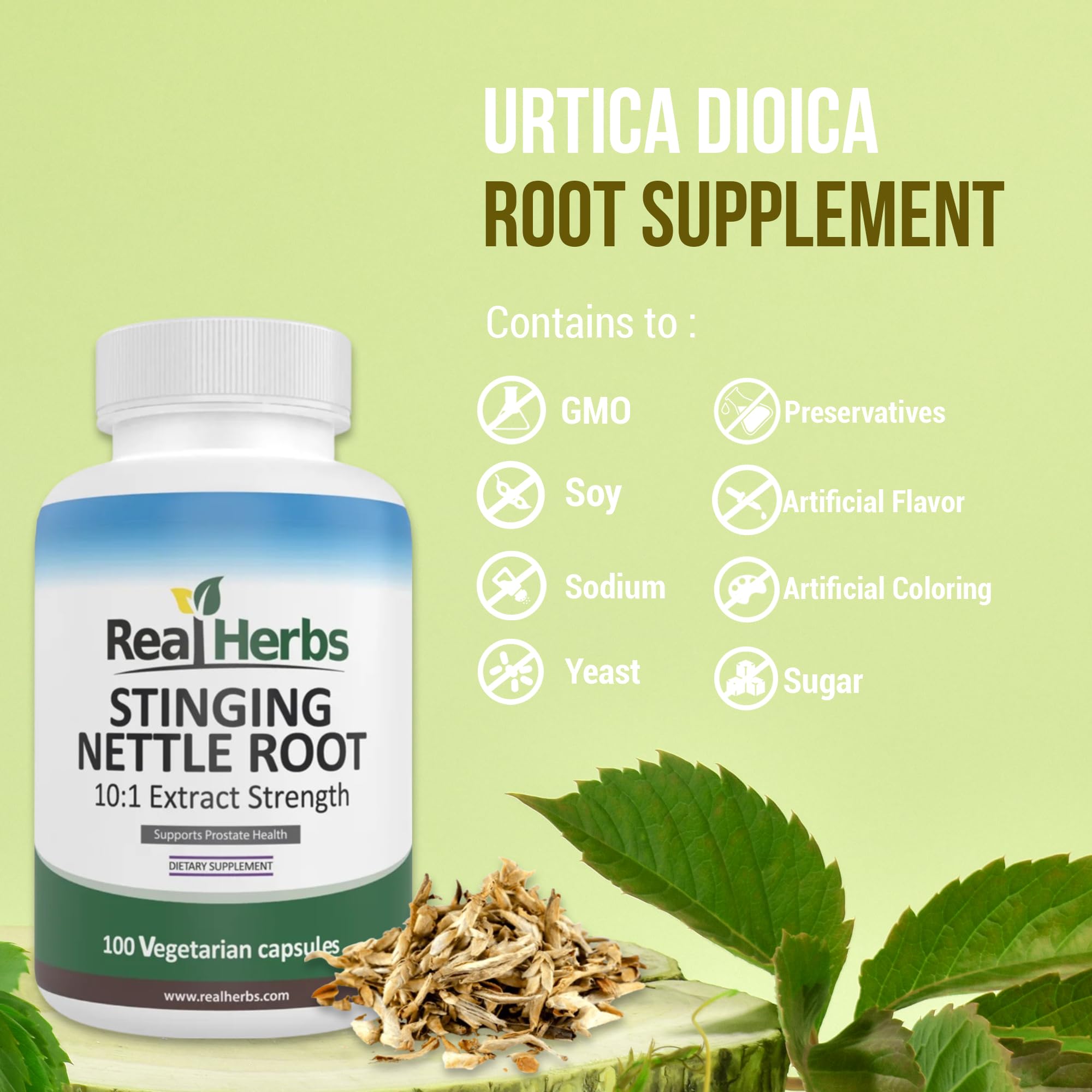
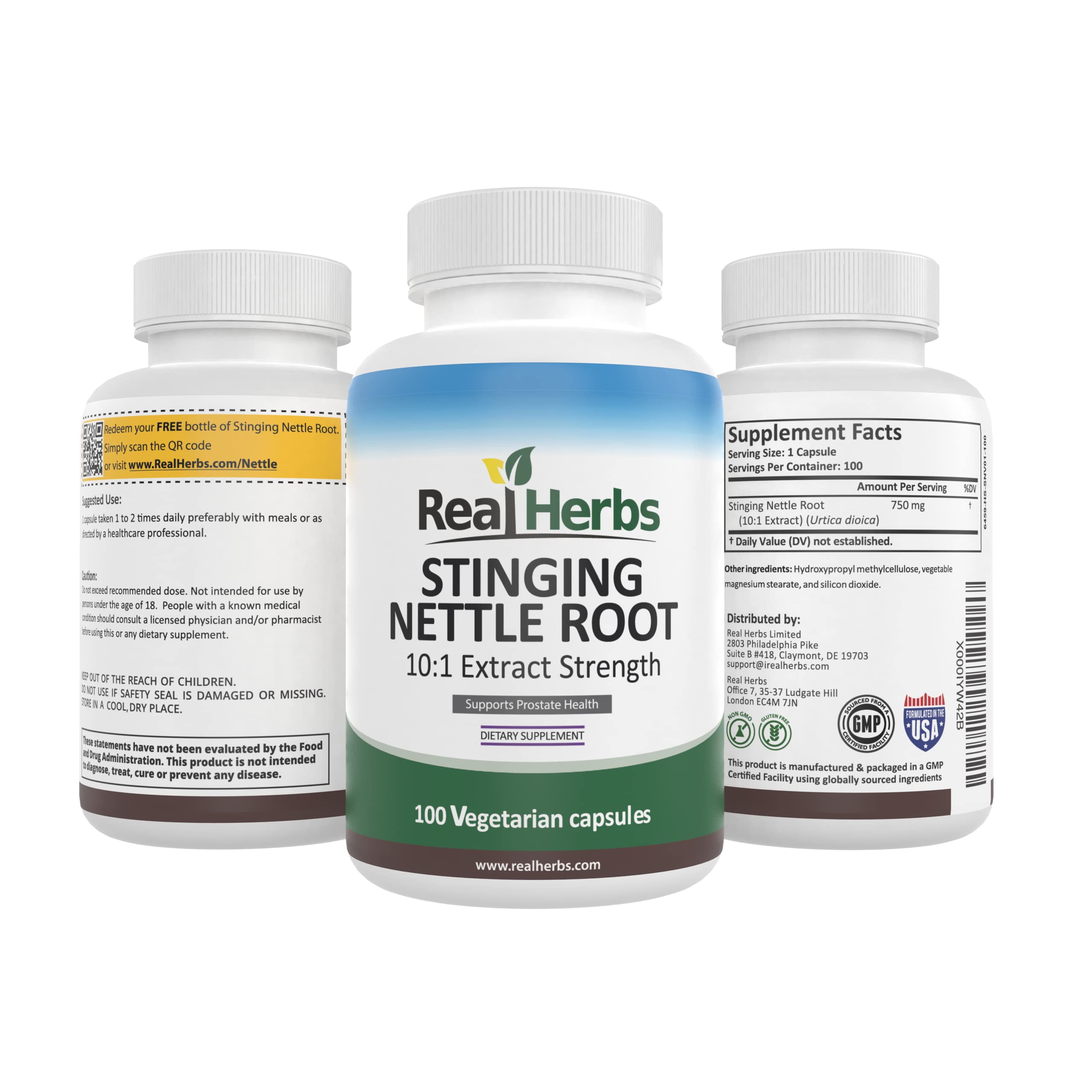
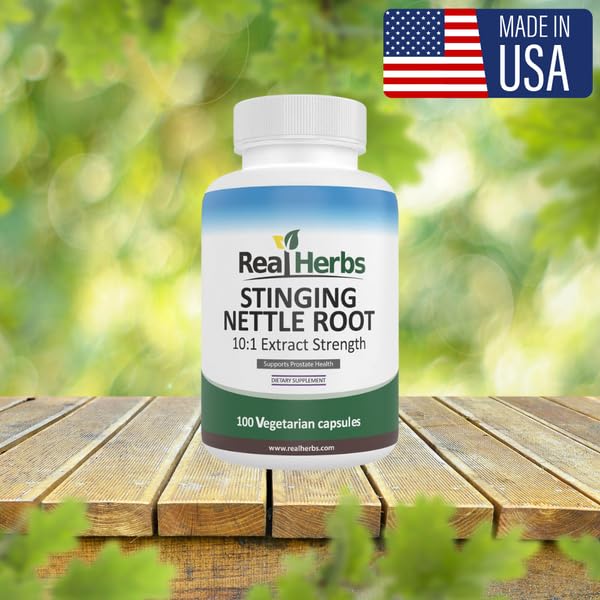
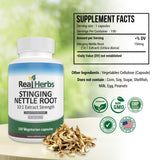
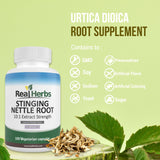
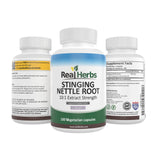
Real Herbs Stinging Nettle Root Extract delivers 750mg of 10:1 root extract per capsule. Suggested use: take 1-2 capsules daily with a meal, or as directed by your healthcare provider.
Shop Stinging Nettle Root Extract
Backed by our 30-Day Money-Back Guarantee.
Related Articles
Clinical References
- Mittman P. Randomized, double-blind study of freeze-dried Urtica dioica in the treatment of allergic rhinitis. Planta Med. 1990 Feb;56(1):44-7. PMID 2192379
- Samakar B, Mehri S, Hosseinzadeh H. A review of the effects of Urtica dioica (nettle) in metabolic syndrome. Iran J Basic Med Sci. 2022 May;25(5):543-553. PMID 35911652
- Kargozar R, Salari R, Jarahi L, Yousefi M, Pourhoseini SA, Sahebkar-Khorasani M, Azizi H. Urtica dioica in comparison with placebo and acupuncture: a new possibility for menopausal hot flashes: a randomized clinical trial. Complement Ther Med. 2019 Jun;44:166-173. PMID 31126551
- National Institute of Diabetes and Digestive and Kidney Diseases. Stinging Nettle. In: LiverTox: Clinical and Research Information on Drug-Induced Liver Injury. Bethesda (MD): NIDDK; 2023 Mar 3. NBK589898
- Safarinejad MR. Urtica dioica for treatment of benign prostatic hyperplasia: a prospective, randomized, double-blind, placebo-controlled, crossover study. J Herb Pharmacother. 2005;5(4):1-11. PMID 16635963
- Schneider T, Rubben H. Stinging nettle root extract (Bazoton-uno) in long term treatment of benign prostatic syndrome (BPS). Results of a randomized, double-blind, placebo controlled multicenter study after 12 months. Urologe A. 2004 Mar;43(3):302-6. PMID 15045190
- Chrubasik JE, Roufogalis BD, Wagner H, Chrubasik S. A comprehensive review on the stinging nettle effect and efficacy profiles. Part II: urticae radix. Phytomedicine. 2007 Aug;14(7-8):568-79. PMID 17509841
Disclaimer: The information provided in this article is for educational purposes only and is not intended as medical advice. Always consult with a qualified healthcare professional before making any decisions about your health or starting any new supplement regimen, especially when considering doses beyond standard recommendations or if you have existing medical conditions or are taking medications. These statements have not been evaluated by the Food and Drug Administration. This product is not intended to diagnose, treat, cure, or prevent any disease.
© 2026 Real Herbs. All rights reserved.