
What Is Stinging Nettle Root? Uses, Contents and Evidence
By Real Herbs Editorial Team · Published October 2026 · Updated October 2026 · 6 min read
Key takeaway: Stinging nettle root is the underground part of Urtica dioica, a plant best known for its stinging leaves. The best-studied use of the root is for the urinary symptoms of benign prostatic hyperplasia (BPH), and the European Medicines Agency (EMA) lists that as a traditional use once a doctor has excluded serious conditions. The trials are small and short, how the root works is unclear, and for most other claims no human trial of the root was found.
Stinging nettle root is sold as capsules, extracts, tinctures and teas, and described in many different ways online. This guide explains what it is, what it contains, what it has been used and studied for, and how our other guides cover each topic.
Disclosure: Real Herbs sells a stinging nettle root extract. We report each study as it was published, and the studies did not test this exact product.
The plant and the root
Stinging nettle (Urtica dioica) is a herbaceous perennial plant with stinging hairs on its leaves and stems ([1], PMID 31163183). Nettle root is the underground part of the plant. The EMA describes the herbal substance as dried, whole or fragmented underground parts of Urtica dioica L., with Urtica urens L. and their hybrids also covered ([2]).
Leaves and roots are used differently. The EMA lists leaf for minor joint pain and for flushing the urinary tract, and root for urinary symptoms of BPH ([2]; [3]). Our root versus leaf guide sets out the differences.
What is in the root
The EMA assessment report lists a lectin called Urtica dioica agglutinin (UDA) at 0.05 to 0.6% of the root, lignans (higher in U. dioica roots than in U. urens roots), sterols, phenylpropanes, ceramides, hydroxy fatty acids and other groups, and names polysaccharides as possible active principles ([2]). Another review reports oleanolic acid, sterols and steryl glycosides in the roots, in contrast to the polyphenols found in aerial parts ([4], PMID 29987208).
Only a few components of the active principle have been identified, and the mechanism of action is still unclear ([5], PMID 17509841). That is why our guides on DHT and testosterone and SHBG describe the laboratory findings as leads and not as established mechanisms.
What it is used and studied for
The EMA accepts one traditional use for the root: relief of lower urinary tract symptoms related to BPH, after serious conditions have been excluded by a doctor ([2]). Clinical trials have tested root extracts, and a root and saw palmetto combination, in men with BPH. A review concluded that a small number of randomised trials indicate a proprietary methanolic extract may improve BPH complaints, and that the size of the effect needs confirmation in further studies ([5], PMID 17509841).
Swipe sideways to see all columns.
| Topic | What we found for nettle root | Our guide |
|---|---|---|
| BPH symptoms | Trials of root extracts and of a root and saw palmetto combination; results vary between trials | Nettle root for BPH |
| Urine flow and night-time urination | Flow results differ between trials; night-time urination data come from a combination product | Urinary flow and nocturia |
| DHT | Not confirmed; the EMA calls the mechanism unclear | Does nettle root block DHT? |
| Testosterone and SHBG | Testosterone unchanged in the studies cited; SHBG findings come mainly from laboratory work | Testosterone and SHBG |
| Blood sugar | No root trial found; trials used leaf or mixed products | Blood sugar |
| Blood pressure and heart | No human root trial found; one root study in the lab and in rats | Blood pressure and heart |
| Kidney and urinary tract | No human root trial found; rat studies used leaf or aerial parts | Kidney and urinary tract |
Forms
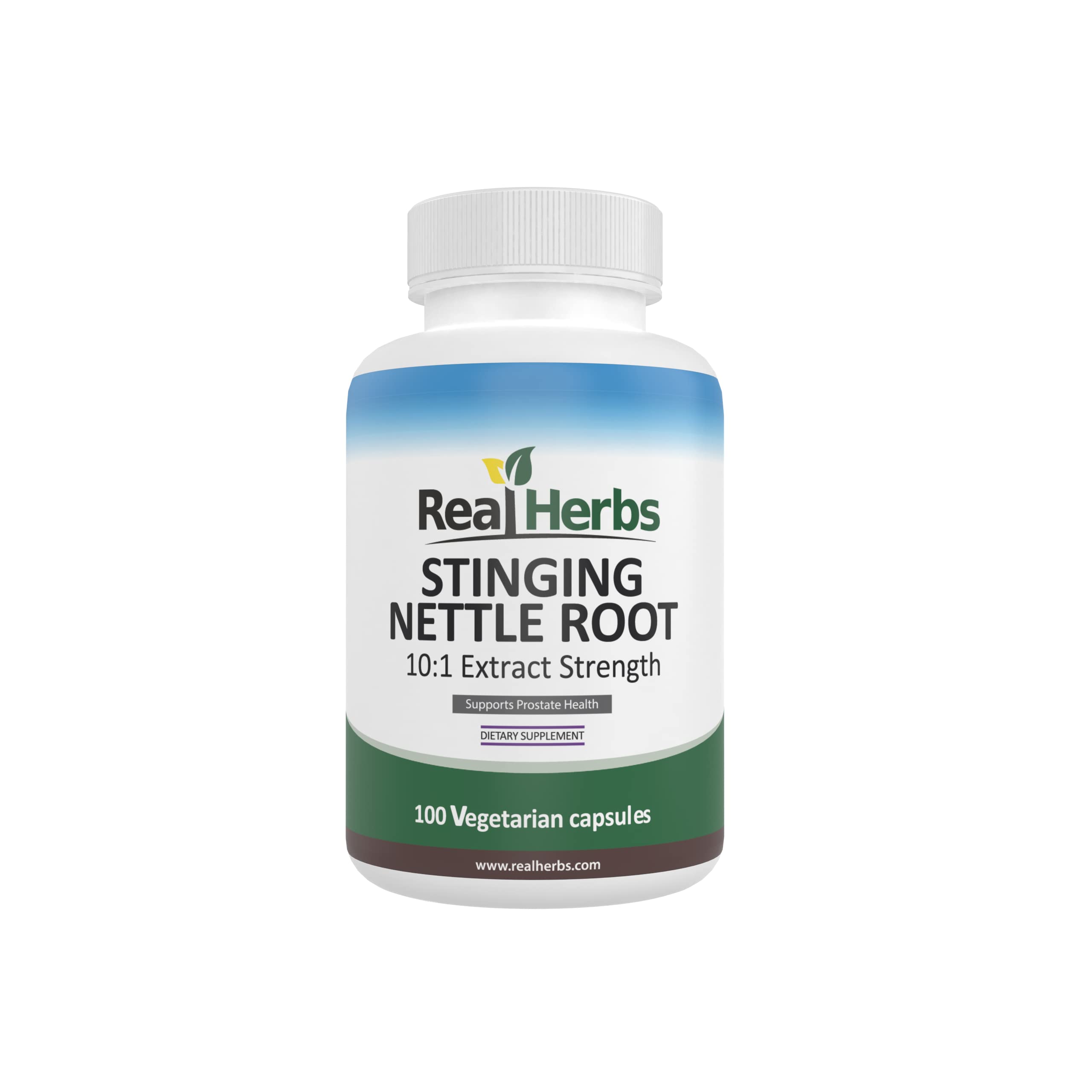
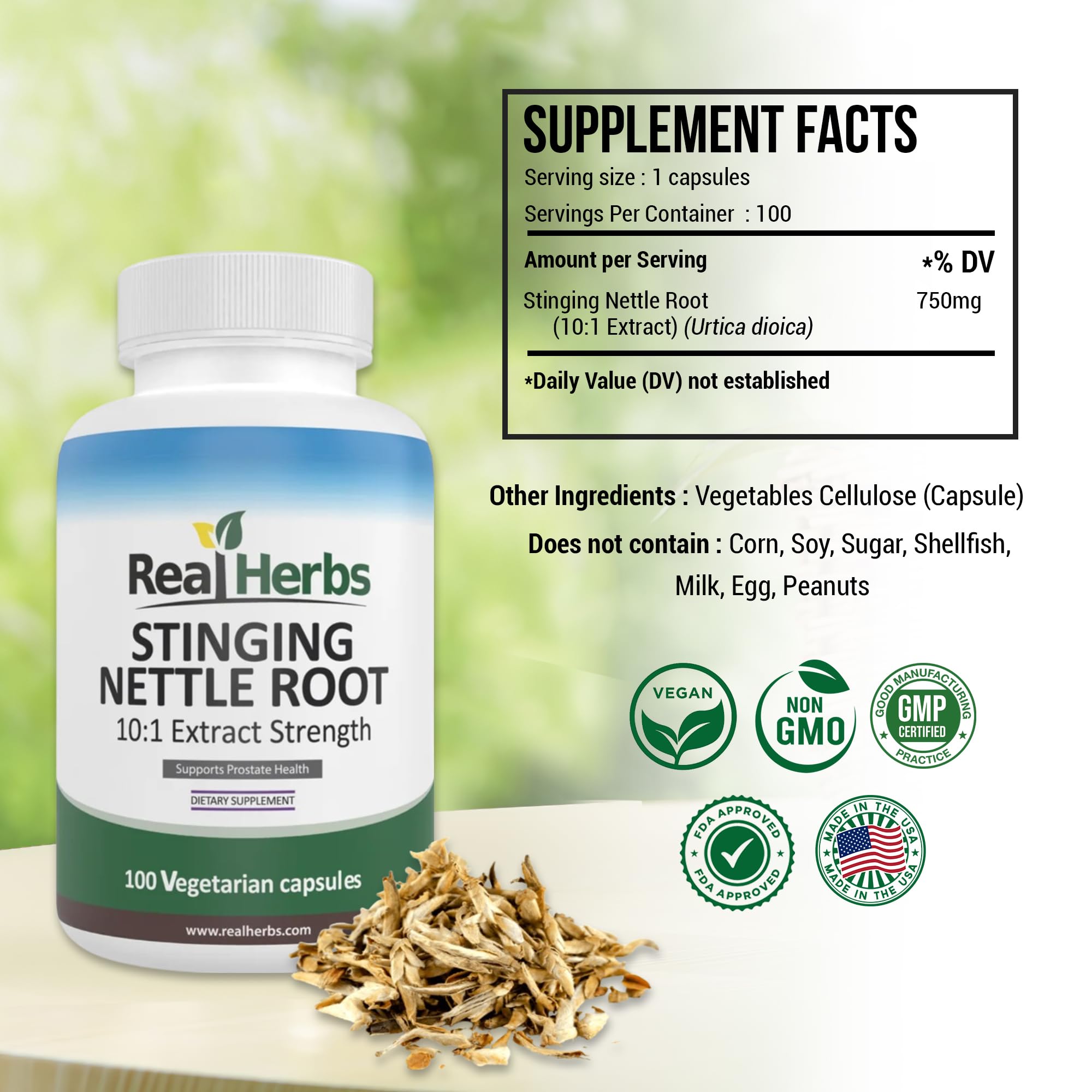
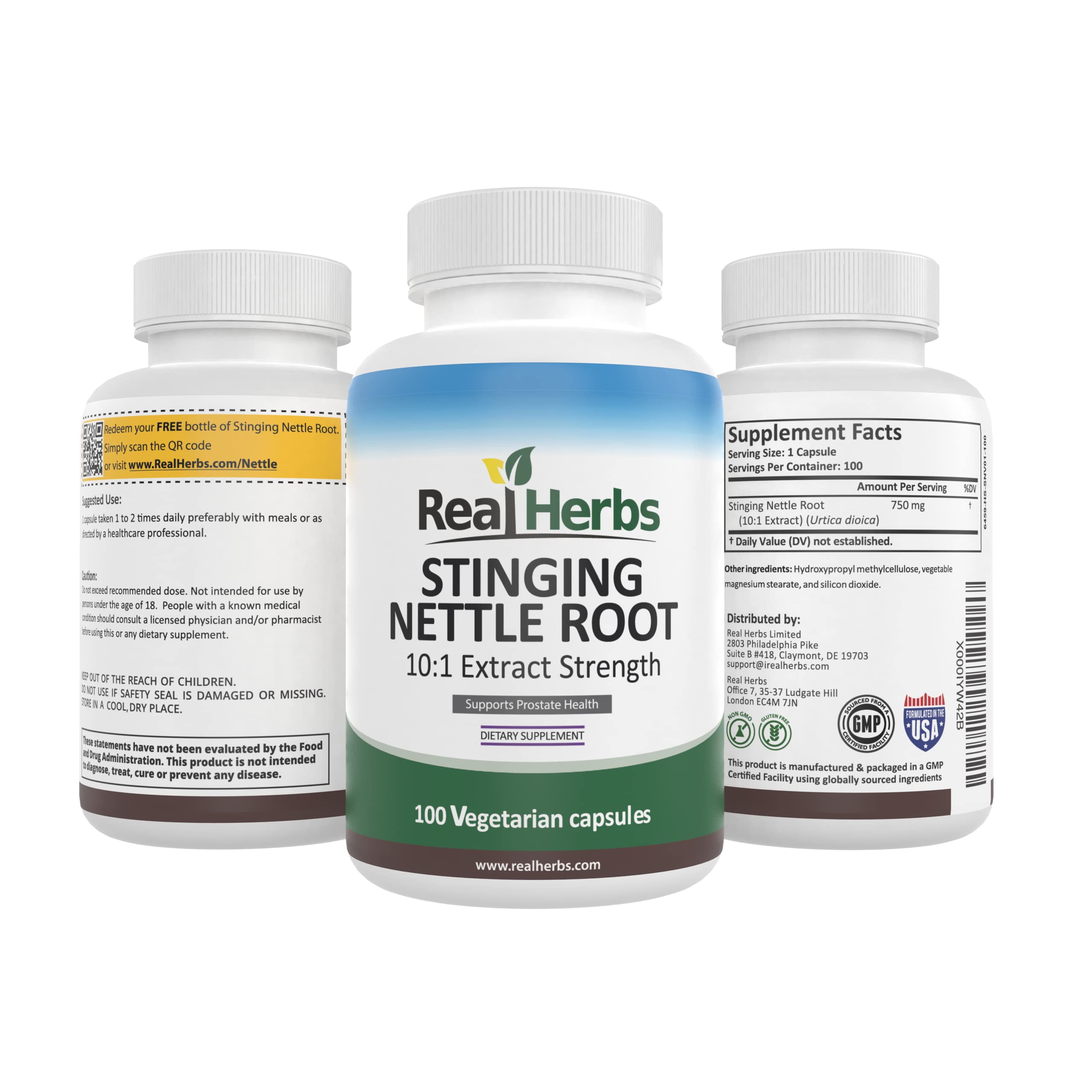
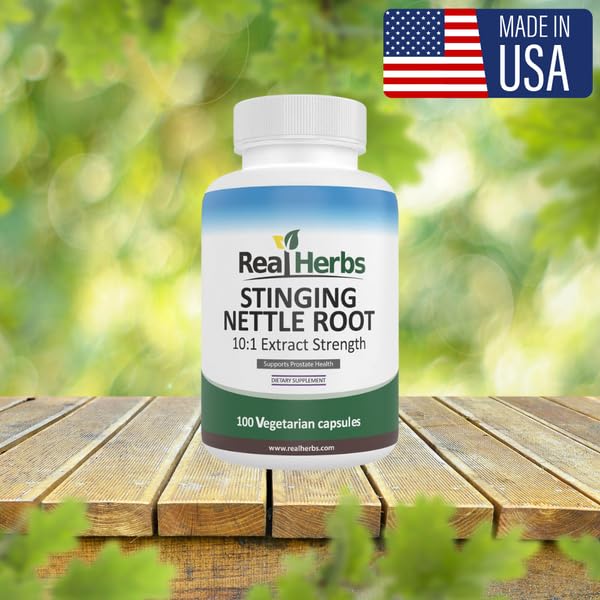
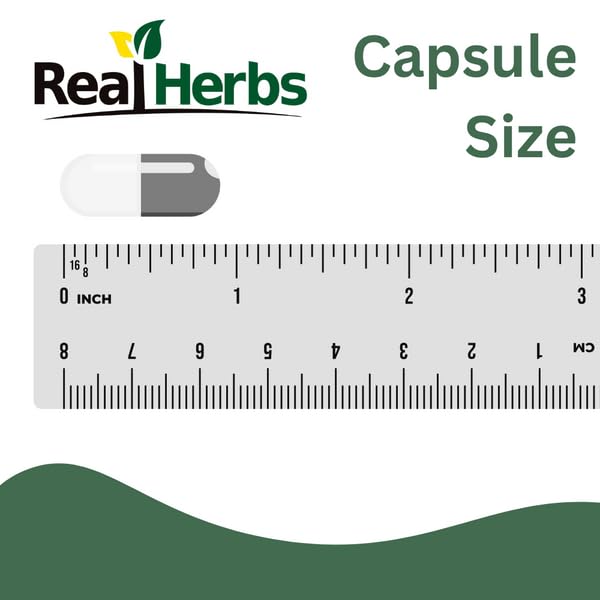
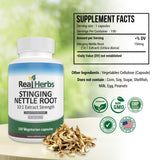
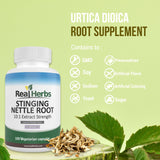
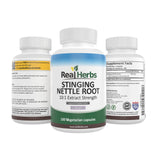
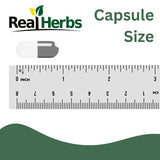
Nettle root is sold as capsules and tablets of dried root or concentrated extract, as tinctures and as tea. The EMA assessment report describes several preparations, including herbal tea and extracts ([2]). An extract ratio such as 10:1 means roughly 10 parts of dried root went into 1 part of extract. The Real Herbs capsule contains 750 mg of a 10:1 root extract, about 7,500 mg of dried root equivalent, and none of the studies cited tested it. Our dosage, timing and forms guide covers amounts used in trials.
Safety and who should check first
A review of nettle root reported a very low risk of adverse events and low toxicity, while noting that pre-clinical safety data remain to be completed ([5], PMID 17509841). The EMA lists hypersensitivity as a contraindication and advises seeing a doctor again if complaints worsen or if fever, spasms, blood in the urine, painful urination or urinary retention occur ([2]). Because urinary symptoms can come from BPH or other conditions, get them checked first. See our safety guide and interactions guide.
Frequently asked questions
What is stinging nettle root?
It is the underground part of the stinging nettle plant, Urtica dioica. It is used as a traditional herbal remedy for the urinary symptoms of BPH and sold as capsules, extracts, tinctures and teas.
Is stinging nettle root the same as nettle leaf?
No. They are different parts of the plant with different compounds, traditional uses and research. The EMA lists root for urinary symptoms of BPH and leaf for minor joint pain and urinary flushing.
What is nettle root used for?
The EMA lists traditional use for relief of urinary symptoms related to BPH after a doctor has excluded serious conditions. Other claims online have not been tested for the root in people.
What is in nettle root?
The EMA report lists a lectin (UDA), lignans, sterols and other groups, and names polysaccharides as possible active principles. Only a few components of the active principle have been identified.
Does nettle root work?
Trials report improvements in some urinary measures, and the results vary between studies. Reviews say the size of the effect needs confirmation.
What does a 10:1 root extract mean?
Roughly 10 parts of dried root were used to make 1 part of extract.
Does nettle root have side effects?
A review reported a very low risk of adverse events, and the EMA lists hypersensitivity as a contraindication. See our safety guide for details and who should check first.
Should I see a doctor before taking it?
Yes, especially for urinary symptoms, because BPH and other conditions can cause them. Tell your doctor or pharmacist about any supplement you take.
The bottom line
Stinging nettle root is the underground part of a familiar plant, with a documented traditional use for the urinary symptoms of BPH and a modest body of trials behind it. For topics beyond that, the research on the root is limited. Check your symptoms with a doctor first, and use our topic guides to see what each claim rests on.
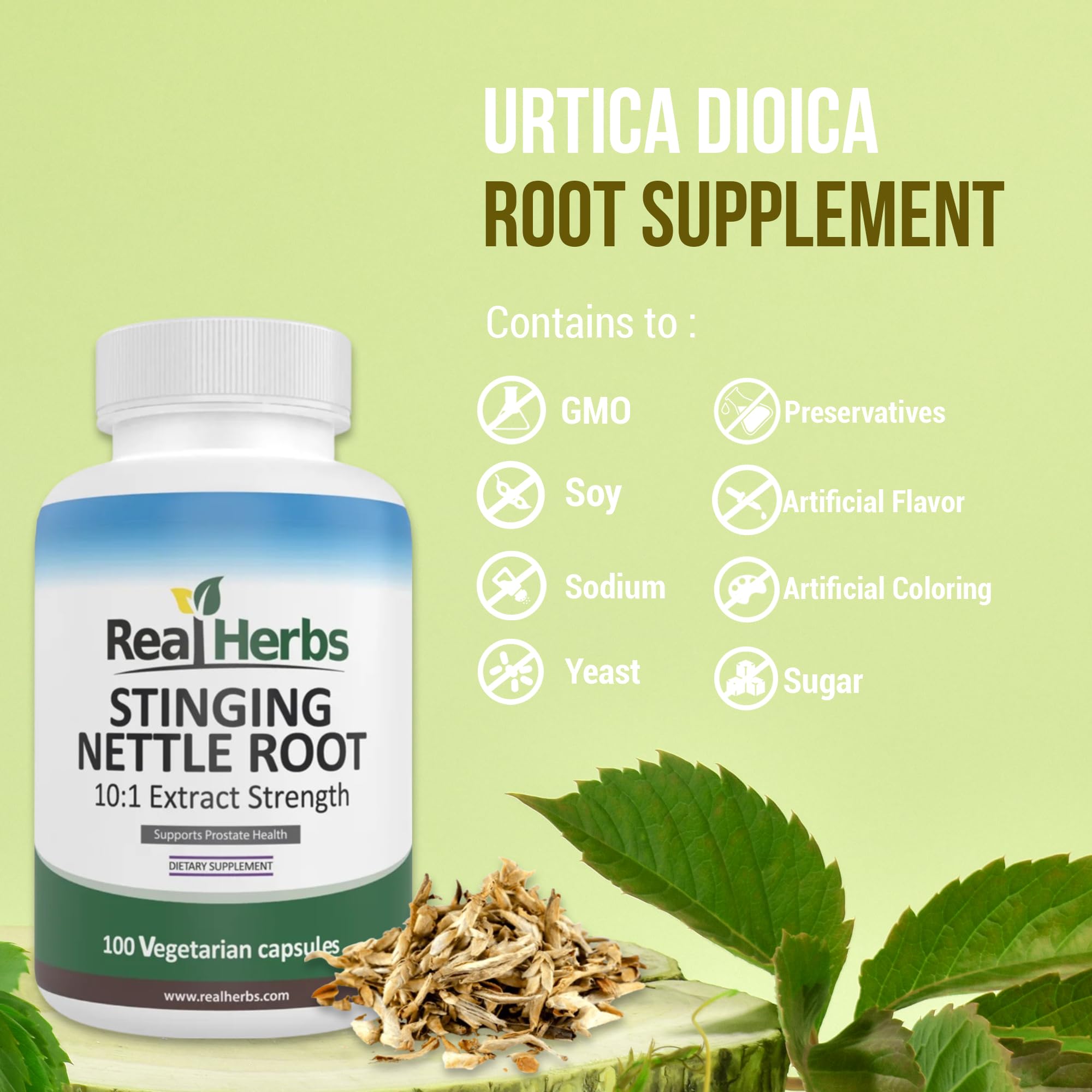
Real Herbs Stinging Nettle Root Extract: 750 mg of 10:1 root extract per capsule (about 7,500 mg dried root equivalent), 100 vegetarian capsules. Backed by our 100-Day Money-Back Guarantee. Real Herbs sells this product. The trials and the EMA documents did not test this exact product.
Related reading
- Nettle root vs nettle leaf: key differences
- Stinging nettle root for BPH: what the research shows
- Nettle root dosage, timing and forms
- Nettle root side effects and who should avoid it
References
- Dhouibi R, Affes H, Ben Salem M, Hammami S, Sahnoun Z, Zeghal KM, Ksouda K. Screening of pharmacological uses of Urtica dioica and others benefits. Prog Biophys Mol Biol. 2020;150:67-77. PMID 31163183 · DOI 10.1016/j.pbiomolbio.2019.05.008
- European Medicines Agency, Committee on Herbal Medicinal Products. Assessment report on Urtica dioica L.; Urtica urens L., radix. EMA/HMPC/322627/2023. Final, Revision 1, 22 January 2025. ema.europa.eu
- European Medicines Agency, Committee on Herbal Medicinal Products. Community herbal monograph on Urtica dioica L.; Urtica urens L., folium. EMA/HMPC/508015/2007. 14 January 2010. ema.europa.eu
- Kregiel D, Pawlikowska E, Antolak H. Urtica spp.: ordinary plants with extraordinary properties. Molecules. 2018;23(7):1664. PMID 29987208 · DOI 10.3390/molecules23071664
- Chrubasik JE, Roufogalis BD, Wagner H, Chrubasik S. A comprehensive review on the stinging nettle effect and efficacy profiles. Part II: urticae radix. Phytomedicine. 2007;14(7-8):568-79. PMID 17509841 · DOI 10.1016/j.phymed.2007.03.014
Disclaimer: This article is for educational purposes only and is not medical advice. Talk with a qualified healthcare professional before starting any supplement, especially if you have a medical condition or take medication. These statements have not been evaluated by the Food and Drug Administration. This product is not intended to diagnose, treat, cure, or prevent any disease.