
Stinging Nettle Root and Hair Loss: What Research Shows
By Real Herbs Editorial Team · Published October 2026 · Updated October 2026 · 7 min read
Key takeaway: We found no human trial of stinging nettle root, or any nettle product, for hair loss. What exists is a cell experiment on nettle leaf extract, a computer-modelling study and traditional use. The idea that nettle root helps hair by lowering DHT comes from lab and animal work on the prostate and has not been confirmed in men. Pattern hair loss is best assessed by a doctor or dermatologist, because treatments with human evidence exist and early treatment matters.
Search for nettle root and you will often find it described as a “natural DHT blocker” for hair. This guide checks where that idea comes from, what has actually been tested for hair, and what dermatology sources say about treating pattern hair loss.
Disclosure: Real Herbs sells a stinging nettle root extract and does not market it for hair loss. We report each source as it was published, and none of them tested this exact product.
Pattern hair loss in brief
According to the American Academy of Dermatology (AAD), hereditary hair loss, also called androgenetic alopecia or pattern hair loss, is the most common form of hair loss in men and women and can be inherited from either side of the family. In men it typically appears at the hairline, top of the scalp or crown. In women the hair thins on top of the scalp, and the front hairline usually does not recede ([1]). Dihydrotestosterone (DHT), a hormone made from testosterone, is considered the main driver in men ([2], PMID 40395369).
What we found for nettle and hair
We searched PubMed for studies pairing Urtica dioica or stinging nettle with hair, hair loss or alopecia, and read each result. The table lists what turned up.
Swipe sideways to see all columns.
| Source | Type | What was done | What it found |
|---|---|---|---|
| Pekmezci 2023 Cell study | Cell study, leaf extract | Nettle leaf extract applied to HaCaT skin cells; the expression of the gene for 5-alpha-reductase type II was measured | The gene was expressed about 41% less than in untreated cells (0.59-fold, P = 0.0021). These were skin cells in a dish, not hair follicles or people ([3], PMID 36864786) |
| Hasannejad-Asl 2025 | Computer modelling | Compounds listed for nettle, saw palmetto and fenugreek were screened by docking software for binding to 5-alpha-reductase | Six compounds from the three herbs (jamogenin, neodiosgenin, chlorogenic acid, rutin, riboflavin, ursolic acid) were predicted to bind; the abstract does not say which came from nettle, and the authors proposed them for experimental testing ([2], PMID 40395369) |
| Gasmi 2023 Review | Narrative review | Review of medicinal plants and natural compounds proposed for hair loss | Concluded that medicinal plants hold promise, based on mixed study types; it does not give nettle-specific trial results in its abstract ([4], PMID 37151166) |
That is the whole list. There is no randomized trial, no case series and no study of nettle root on hair growth, hair counts or shedding in people. A claim that nettle root regrows hair would need that kind of evidence, and it has not yet been produced.
Why the DHT idea falls short
The reasoning usually runs: DHT drives pattern hair loss, finasteride blocks the enzyme that makes DHT, nettle root is said to do the same, so nettle root helps hair. Each step is weaker than it sounds for nettle.
Nettle and 5-alpha-reductase. Lab and animal studies of nettle extracts have looked at this enzyme, but they were prostate studies, several did not state the plant part, and a comprehensive review concluded that effects on SHBG, aromatase and growth factor pathways are more likely than direct 5-alpha-reductase inhibition ([5], PMID 23710567; [6], PMID 17509841). Our guide to whether nettle root blocks DHT sets out those studies, and our testosterone and SHBG guide covers the hormone side.
Hair and prostate are different tissues. A prostate result does not transfer to scalp follicles. The one cell study aimed at skin used a leaf extract in a dish ([3], PMID 36864786).
Prescription 5-alpha-reductase inhibitors have human trial data. Finasteride and dutasteride are the drugs in this class, and they carry known side effects. The National Library of Medicine drug information for finasteride lists problems with erections, lower sexual desire and ejaculation problems among its common effects, and, for BPH, that symptoms may take at least 6 months to improve ([7]). Nettle root has no comparable hair data to set against those.
What dermatology sources say
The AAD names topical minoxidil, which is FDA-approved for men and women, and finasteride, which works best when started early and which people who may become pregnant should not take or handle. It also describes low-dose oral minoxidil, spironolactone for women, scalp covers and fibers, scalp micropigmentation and surgery. Minoxidil and finasteride must be continued to keep results. It advises supplements only when there is a deficiency, and stresses early diagnosis, since early treatment is most effective and follicles that have shrunk are harder to restore ([1]).
A 2026 comparison of international treatment guidelines reached a similar picture: topical minoxidil and 5-alpha-reductase inhibitors remain the cornerstone, newer guidance increasingly supports low-dose oral minoxidil and dutasteride, and an individualized plan with regular follow-up is recommended ([8], PMID 42669143). Plant extracts are not part of that core list.
Traditional use
The EMA root assessment report lists dandruff and hair preparations among the many folk uses of nettle root, together with uses for kidney stones, gout and diarrhoea ([9]). A review of nettle in historical medicine likewise records nettle in cosmetic preparations for skin and hair care ([10], PMID 35693473). Traditional use shows what people have tried over time, not whether it works, and the folk preparations were typically applied to the scalp, which is different from an oral capsule.
When to see a doctor
See a doctor or dermatologist if you notice hair loss that is sudden, patchy, accompanied by scalp pain, redness, scaling or itching, or that follows illness, a new medicine or major stress. Many conditions besides pattern hair loss cause shedding, and some are treatable once found. A diagnosis also tells you whether any of the options above apply to you.
If you are already taking nettle root for another reason, it is reasonable to tell your dermatologist, and our guides to side effects and who should avoid nettle root and medicine interactions cover what to check first.
Frequently asked questions
Does stinging nettle root help hair growth?
We found no human study of nettle root or any nettle product on hair growth or hair loss. The research so far is a cell experiment on leaf extract and computer modelling.
Is nettle root a natural DHT blocker for hair?
That description comes from prostate-related lab and animal work. DHT lowering by nettle root has not been confirmed in men, and hair follicles have not been studied.
Can nettle root replace finasteride or minoxidil?
We found no evidence that it can. Minoxidil and finasteride are the options with human trial data and are named by dermatology sources. Do not stop or change a prescribed treatment without speaking to your doctor.
Does nettle root shampoo or rinse work for hair loss?
Nettle appears in traditional hair preparations, but we found no trial of nettle shampoos or rinses for hair loss.
Which part of nettle has been studied for hair?
The cell experiment we found used leaf extract. The EMA lists dandruff and hair preparations among folk uses of the root, but folk use is not trial evidence.
Should I take supplements for hair loss?
The AAD advises supplements for hair only when there is a deficiency. A doctor can test for deficiencies and look for other causes of shedding.
How long does hair loss treatment take to work?
The sources we cite give no timeline for nettle. The AAD notes that minoxidil and finasteride must be continued to keep results, and finasteride drug information for BPH says symptoms may take at least 6 months to improve. A dermatologist can tell you what to expect.
The bottom line
The case for nettle root as a hair treatment rests on a chain of reasoning about DHT, not on hair trials. Until nettle root is tested on hair in people, treat the claim as unproven. If hair loss is the concern, a dermatologist can diagnose the cause and discuss options with human evidence behind them.
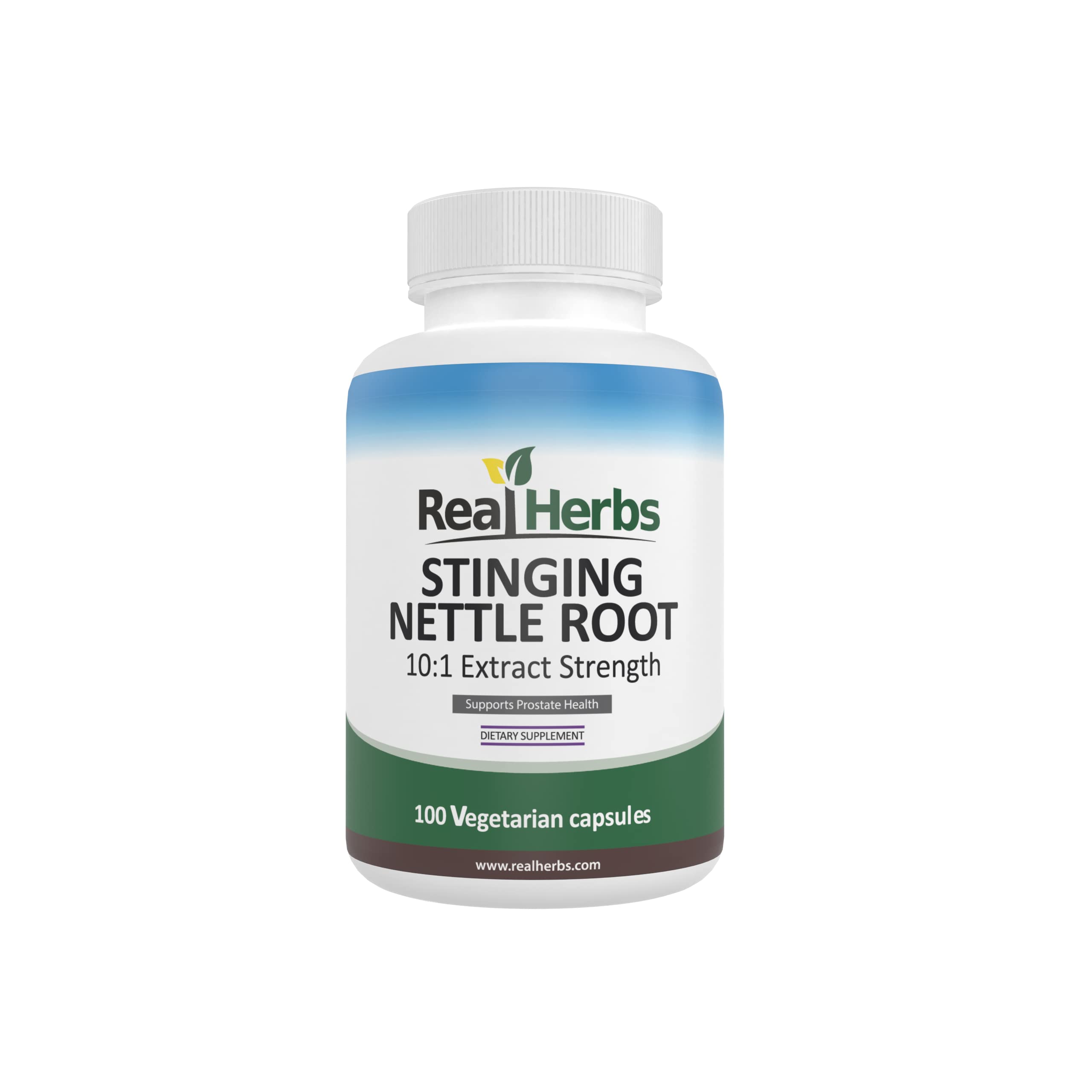
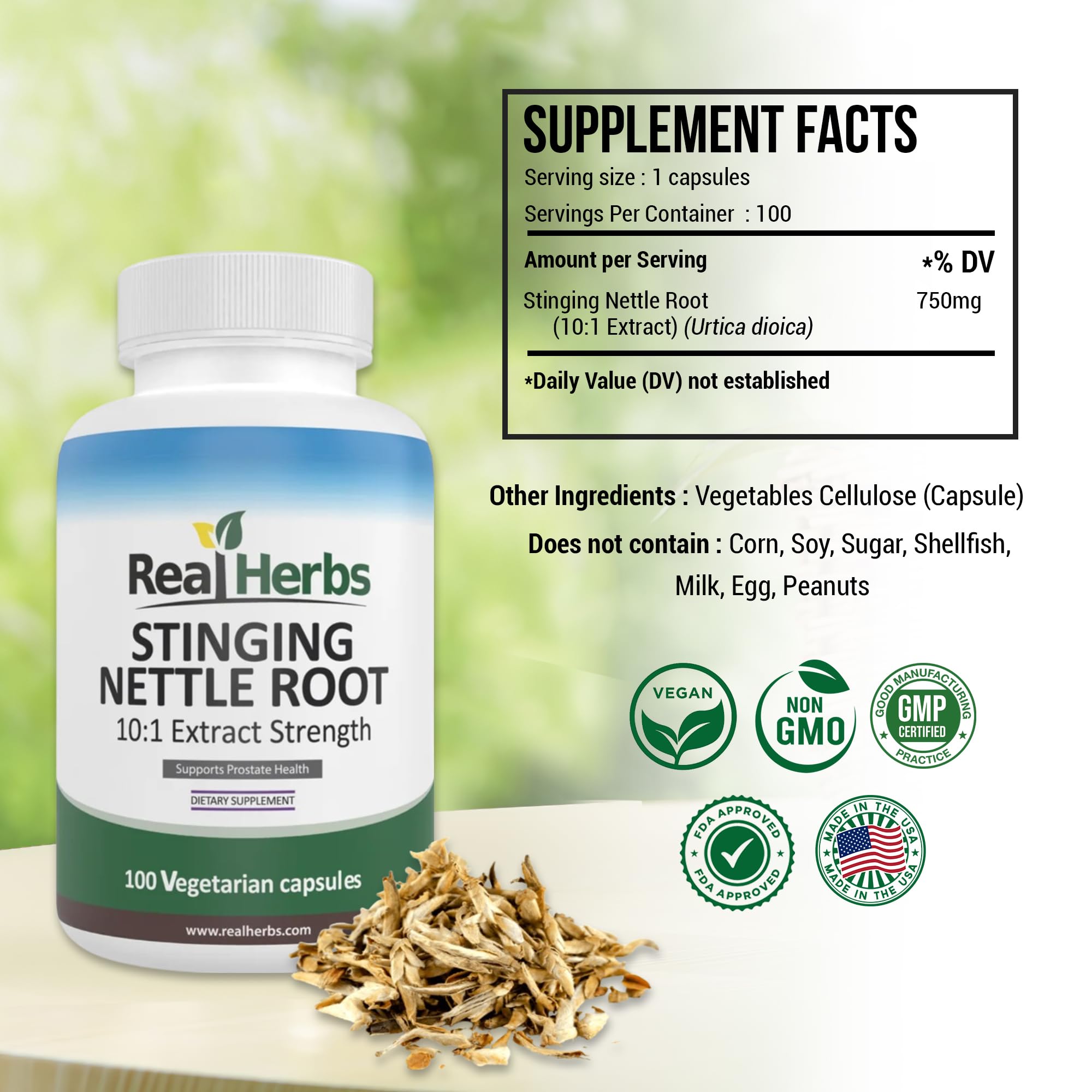
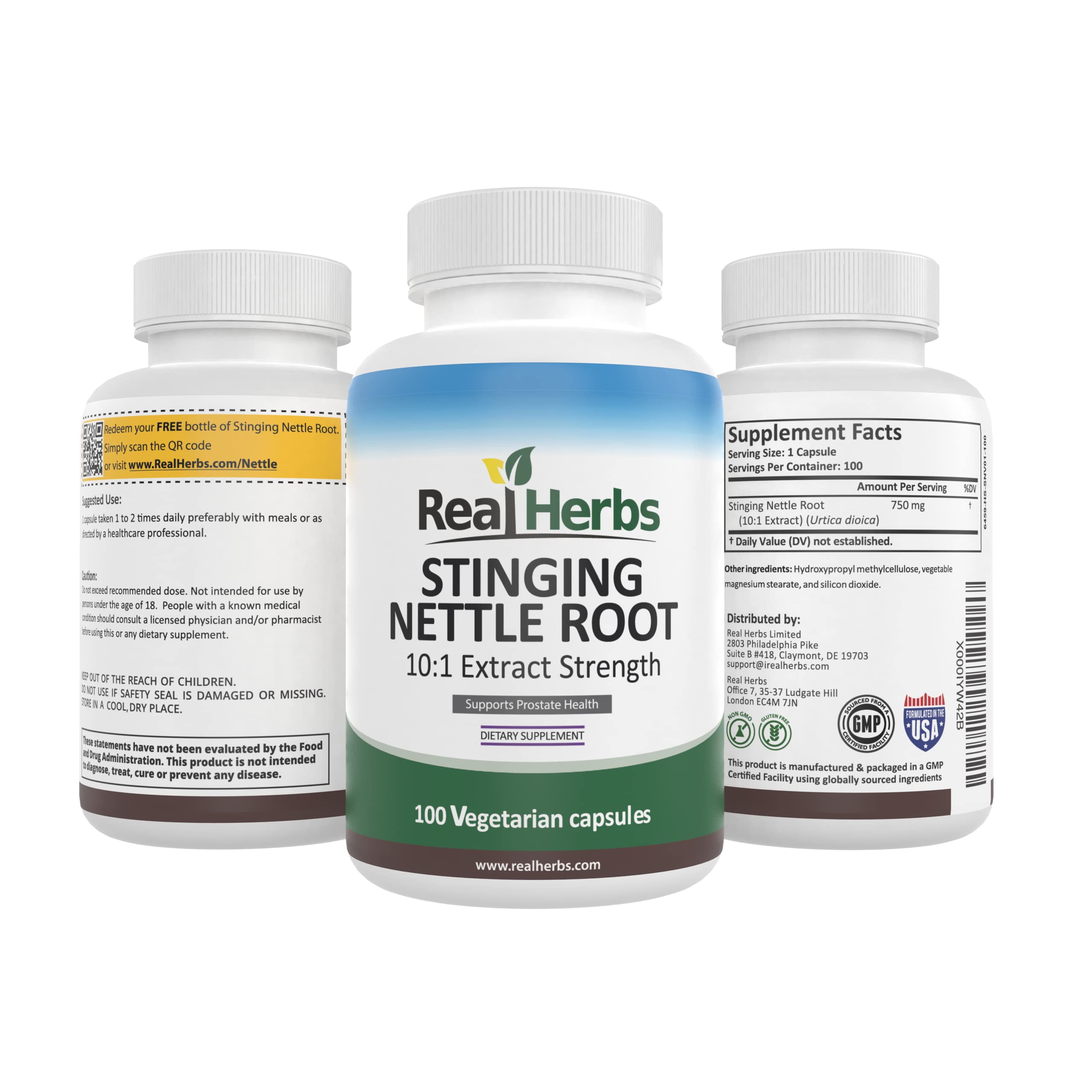
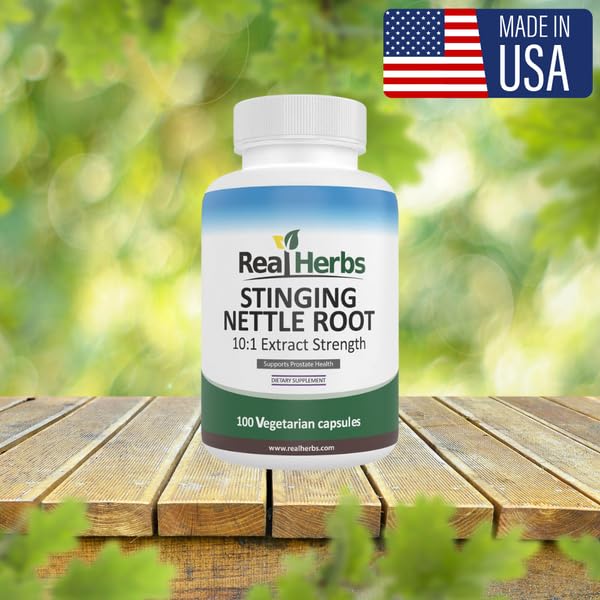
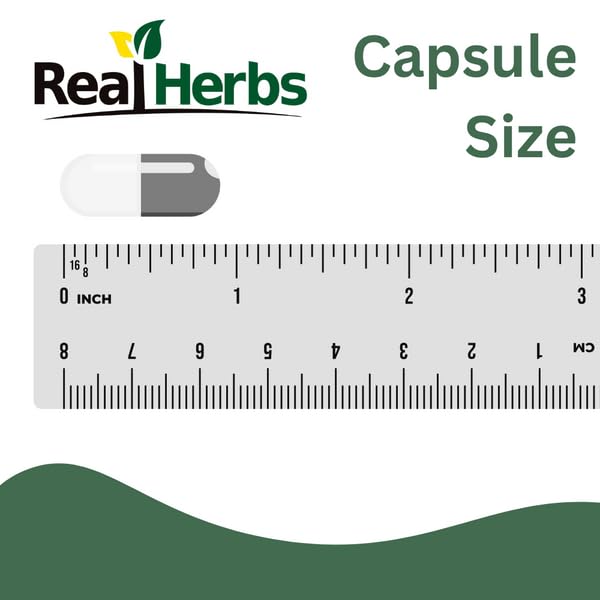
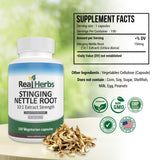
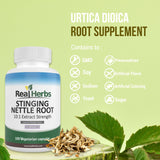
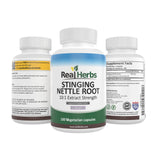
Real Herbs Stinging Nettle Root Extract: 750 mg of 10:1 root extract per capsule (about 7,500 mg dried root equivalent), 100 vegetarian capsules. Backed by our 100-Day Money-Back Guarantee. Real Herbs sells this product. The trials and the EMA documents did not test this exact product.
Related reading
- Does stinging nettle root block DHT?
- Nettle root, testosterone and SHBG
- Stinging nettle root for BPH: what the research shows
- What is stinging nettle root?
References
- American Academy of Dermatology. Finding the right treatments for genetic hair loss (news release, 21 July 2022). aad.org
- Hasannejad-Asl B, Pooresmaeil F, Azadi S, Najafi A, Esmaeili A, Bagheri-Mohammadi S, et al. Computational drug discovery of potential 5α-reductase phytochemical inhibitors and hair growth promotion using in silico techniques. Front Bioinform. 2025;5:1570101. PMID 40395369 · DOI 10.3389/fbinf.2025.1570101
- Pekmezci E, Türkoğlu M. Urtica dioica extract downregulates the gene expression of 5α-RII in HaCaT cells: possible implications against androgenic skin diseases. Georgian Med News. 2023;(334):6-9. PMID 36864786
- Gasmi A, Mujawdiya PK, Beley N, Shanaida M, Lysiuk R, Lenchyk L, et al. Natural compounds used for treating hair loss. Curr Pharm Des. 2023;29(16):1231-1244. PMID 37151166 · DOI 10.2174/1381612829666230505100147
- Nahata A, Dixit VK. Evaluation of 5α-reductase inhibitory activity of certain herbs useful as antiandrogens. Andrologia. 2014;46(6):592-601. PMID 23710567 · DOI 10.1111/and.12115
- Chrubasik JE, Roufogalis BD, Wagner H, Chrubasik S. A comprehensive review on the stinging nettle effect and efficacy profiles. Part II: urticae radix. Phytomedicine. 2007;14(7-8):568-79. PMID 17509841 · DOI 10.1016/j.phymed.2007.03.014
- National Library of Medicine. Finasteride: MedlinePlus Drug Information. Last revised 15 June 2026. medlineplus.gov
- Rózsa P, Kemény L, Gyulai R. Modern treatment of androgenetic alopecia [in Hungarian, English abstract]. Orv Hetil. 2026;167(35):1385-1393. PMID 42669143 · DOI 10.1556/650.2026.33637
- European Medicines Agency, Committee on Herbal Medicinal Products. Assessment report on Urtica dioica L.; Urtica urens L., radix. EMA/HMPC/322627/2023. Final, Revision 1, 22 January 2025. ema.europa.eu
- Harrison F, Furner-Pardoe J, Connelly E. An assessment of the evidence for antibacterial activity of stinging nettle (Urtica dioica) extracts. Access Microbiol. 2022;4(3):000336. PMID 35693473 · DOI 10.1099/acmi.0.000336
Disclaimer: This article is for educational purposes only and is not medical advice. Talk with a qualified healthcare professional before starting any supplement, especially if you have a medical condition or take medication. These statements have not been evaluated by the Food and Drug Administration. This product is not intended to diagnose, treat, cure, or prevent any disease.