How to Prepare Stinging Nettle Root: A Complete Guide
By Jessica Johnson, Herbal Science Researcher at Real Herbs | Updated: July 2026 | Reading time: 8 minutes

Key takeaway: Nettle root's fibrous, less water-soluble compounds need a longer extraction process than leaf. A decoction (simmering, not steeping) is the traditional home method, while tinctures and standardized capsules offer more concentrated, precisely-dosed commercial alternatives.
Understanding Stinging Nettle Root and Its Benefits
Stinging nettle root is the underground part of the Urtica dioica plant, typically harvested in autumn or early spring when its compounds are most concentrated. Unlike leaves, which are rich in vitamins, minerals, and compounds relevant to allergies, root is particularly rich in lignans, plant sterols (like beta-sitosterol), and scopoletin (PMC9864842).
These compounds contribute to root's primary benefits:
- Prostate health support: Nettle root is well-studied for alleviating BPH symptoms, helping improve urinary flow. It works partly by inhibiting prostate cell growth, specifically demonstrated as an antiproliferative effect on epithelial (LNCaP) prostate cells in vitro, with stromal cell growth not significantly affected in the same study (Konrad L, Muller HH, Lenz C, et al. Planta Med. 2000 Feb;66(1):44-7. PMID 10705733), and effects on Na+,K+-ATPase relevant to prostate cell function (PMID 7510891).
- Hormonal balance: Lignans in nettle root interact with SHBG, potentially increasing bioavailable ("free") testosterone (PMID 17509841).
- Anti-inflammatory properties: Root has documented anti-inflammatory properties relevant to overall wellness (PMID 17509841, PMID 35800714).
Preparation Methods for Stinging Nettle Root
Given root's fibrous nature and specific compounds, some preparation methods extract its beneficial properties more effectively than others.
1. Decoctions (Traditional Method)
For tougher plant parts like roots, bark, and seeds, a decoction (simmering) is generally preferred over a simple infusion (steeping), better suited to extracting harder-to-reach compounds.
-
Preparation:
- Clean fresh nettle roots thoroughly, removing any soil. If using dried roots, ensure they're free of debris.
- Chop the roots into small pieces (about 1/4 to 1/2 inch) to increase surface area for extraction.
- Add chopped roots to a pot with cold water (roughly 1 tablespoon of dried root per 1-2 cups of water).
- Bring to a boil, then reduce heat and simmer for 20-30 minutes, or until the liquid has reduced by about one-third.
- Strain the liquid, discarding the root material.
- Usage: Consume warm or chilled. Expect an earthy, slightly bitter taste.
- Why it works: Simmering breaks down tougher plant fibers and extracts compounds like lignans and sterols that are less water-soluble than those in leaves (PMID 17509841, PMC9864842). Worth knowing: research on nettle infusions found that for vitamin C specifically, brewing at 50-60°C was optimal, hot enough to extract it but not so hot that it was destroyed (Wolska J, Czop M, Jakubczyk K, Janda K. Rocz Panstw Zakl Hig. 2016;67(4):367-371. PMID 27925706). That study used steeped infusions rather than a boiled decoction, so it doesn't map perfectly onto this method, but it's a useful general principle: very high heat isn't necessarily better for preserving heat-sensitive compounds.
2. Tinctures (Alcoholic Extracts)
Tinctures are concentrated liquid extracts made by soaking herbs in alcohol (or an alcohol-water mix) for several weeks. Alcohol is an effective solvent for extracting compounds that aren't water-soluble.
- Preparation: While possible at home, tinctures are more commonly purchased commercially given the precision required for extraction and standardization, ensuring optimal levels of active compounds, including lipophilic (fat-soluble) extracts shown to have potent anti-inflammatory activity (Johnson TA, Sohn J, Inman WD, Bjeldanes LF, Rayburn K. Phytomedicine. 2013 Jan;20(2):143-147. PMID 23092723). It's worth knowing this same research found root extracts showed moderate to weak activity compared to other plant parts tested, with flower extracts showing the strongest effect.
- Usage: Tinctures are potent, so only small doses (drops) are typically needed, usually diluted in water.
- Why it works: Alcohol extracts a broader spectrum of compounds, including lipophilic ones, than water-based methods alone.
3. Encapsulated Powdered Extracts (Commercial Preparation)
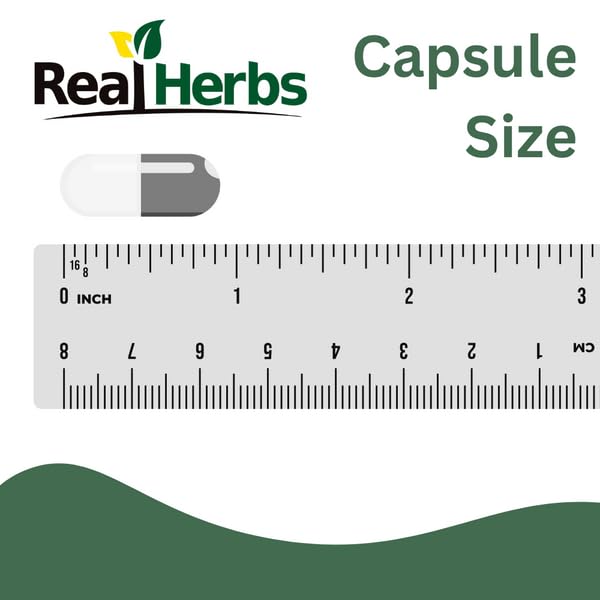
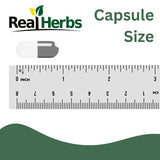
For convenience and consistent dosing, encapsulated powdered extracts are the most popular commercial form of nettle root supplements, prepared by dehydrating and grinding the root or creating a concentrated extract that's dried and encapsulated.
- Preparation: A specialized commercial process; many products are standardized to specific percentages of active compounds for consistent potency.
- Usage: Take capsules with water as directed on the label, no preparation required.
- Why it works: Delivers a convenient, shelf-stable, concentrated dose of the root's beneficial compounds.
Safety and General Usage Tips
- Source quality: Use nettle root from reputable sources. If foraging, identify the plant correctly and harvest from clean, uncontaminated areas.
- Proper handling: Fresh root can still have some stinging hairs (though less potent than leaves). Wear gloves when handling fresh root.
- Dosage: Clinical trials on nettle root have generally used doses in the 300-600mg range daily for standardized extracts. Start with a lower dose to assess tolerance.
- Consult a professional: Talk to a healthcare provider before starting, especially with existing health conditions or medications, given potential drug interactions (PMID 17509841).
- Mild side effects: Generally well-tolerated, though mild gastrointestinal upset or increased urination can occur (PMID 17509841).
Frequently Asked Questions
Can I just steep nettle root in hot water like a tea bag?
Not effectively. Root is fibrous, and its beneficial compounds are harder to extract than leaf's. A proper decoction (a longer simmer) does a meaningfully better job than a quick steep.
Which method gives the most consistent dose?
Capsules, generally. Standardized extracts are formulated to a guaranteed amount of active compounds, while home-prepared decoctions and tinctures can vary based on the specific root used and preparation technique.
Conclusion: Harnessing the Therapeutic Potential of Nettle Root
Understanding how to prepare nettle root properly is key to getting its real benefits for prostate health and hormonal balance. Whether through a traditional decoction, a concentrated tincture, or a convenient standardized capsule, proper preparation ensures you're actually extracting the compounds responsible for its documented effects. Prioritize quality sourcing and professional guidance alongside your chosen method.
Prefer a Consistently Dosed Option?
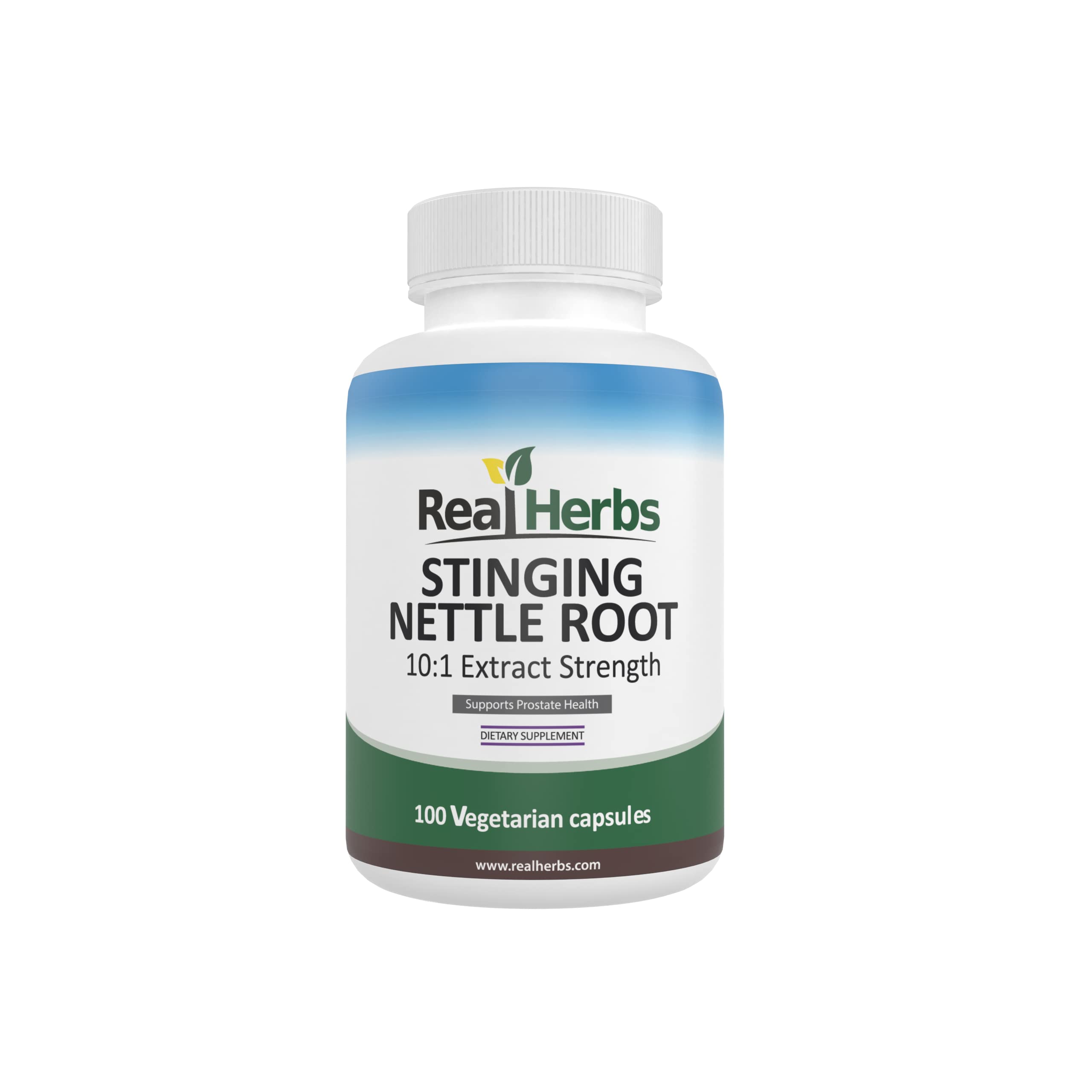
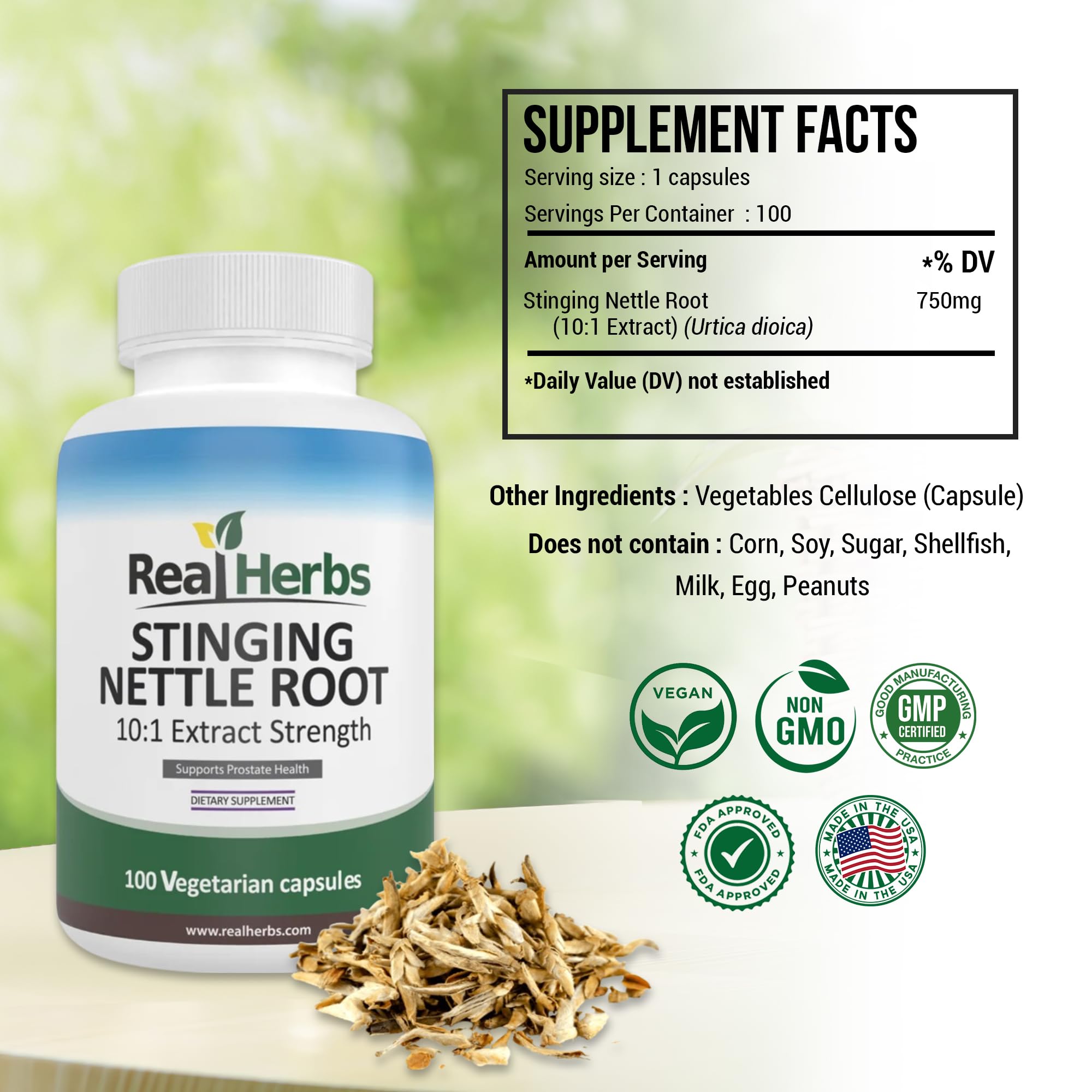
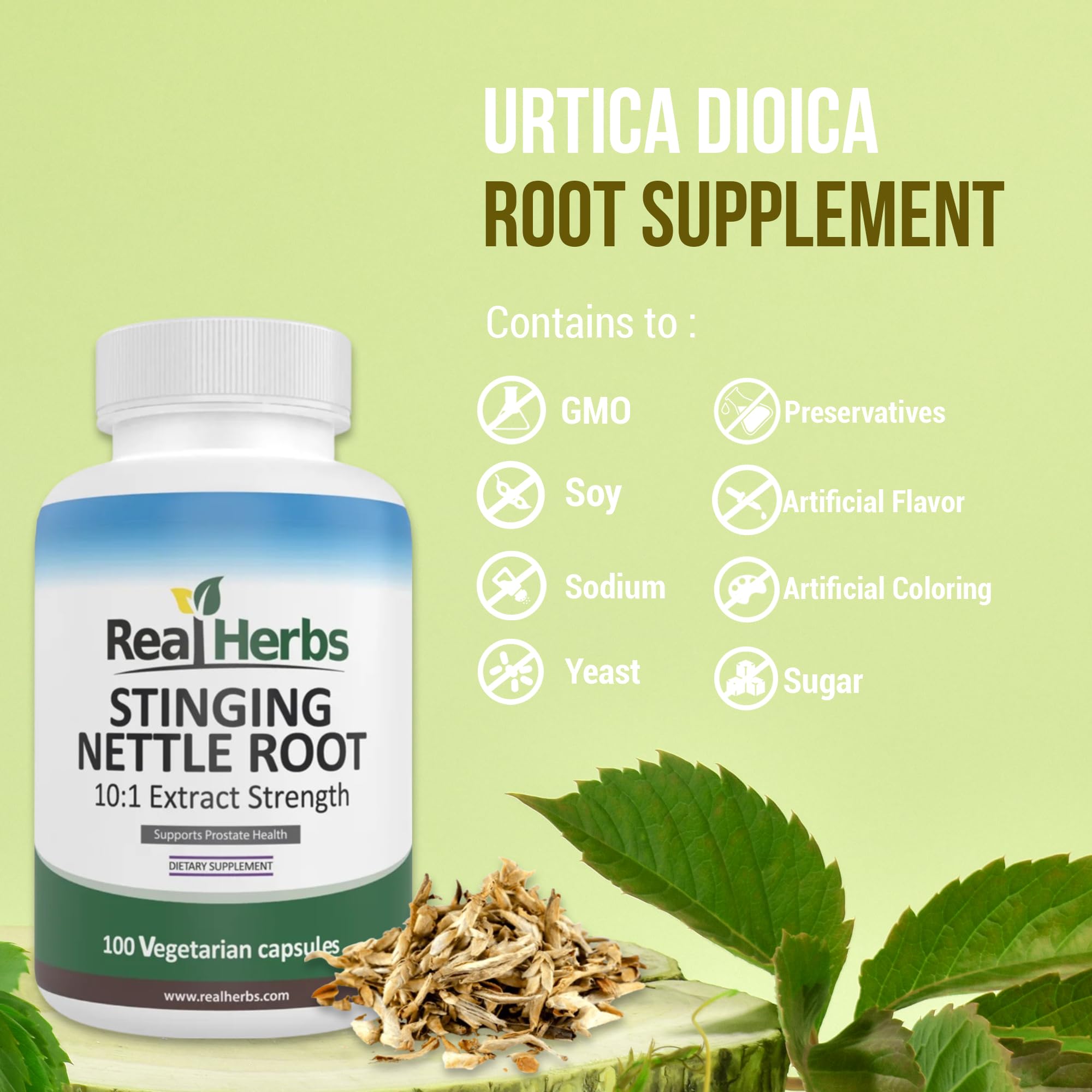
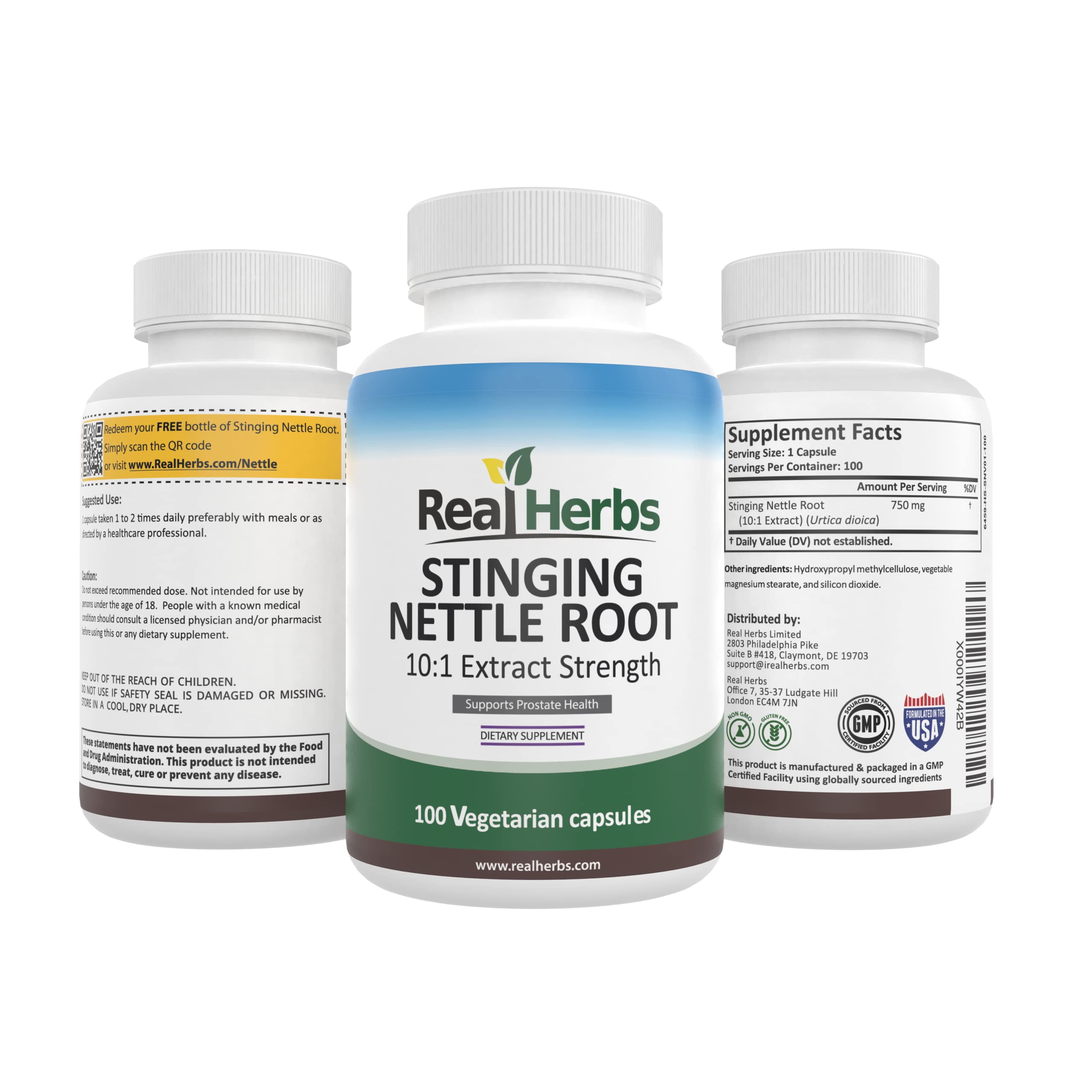
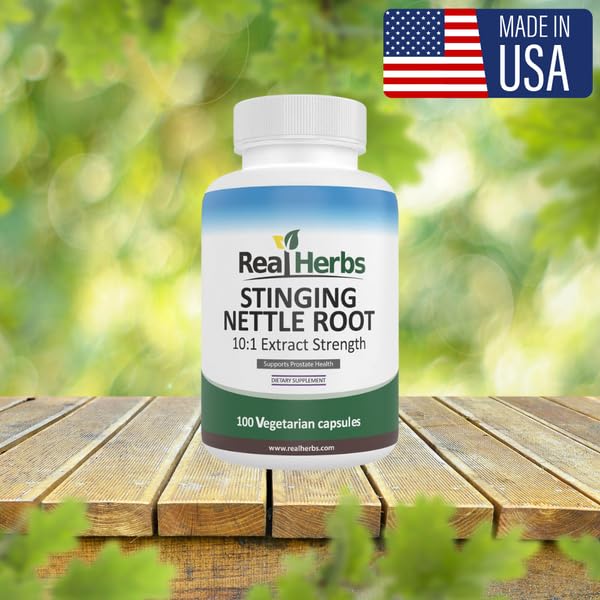
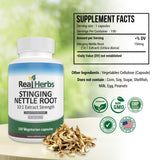
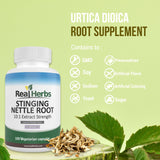
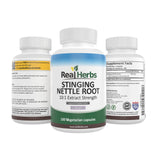
Real Herbs Stinging Nettle Root Extract delivers 750mg of 10:1 root extract per capsule, no decoction required. Suggested use: take 1-2 capsules daily with a meal, or as directed by your healthcare provider.
Shop Stinging Nettle Root Extract
Backed by our 30-Day Money-Back Guarantee.
Related Articles
Clinical References
- Chrubasik JE, Roufogalis BD, Wagner H, Chrubasik S. A comprehensive review on the stinging nettle effect and efficacy profiles. Part II: urticae radix. Phytomedicine. 2007 Aug;14(7-8):568-79. PMID 17509841
- Hirano T, Homma M, Oka K. Effects of stinging nettle root extracts and their steroidal components on the Na+,K+-ATPase of benign prostatic hyperplasia. Planta Med. 1994 Feb;60(1):30-33. PMID 7510891
- Konrad L, Muller HH, Lenz C, Laubinger H, Aumuller G, Lichius JJ. Antiproliferative effect on human prostate cancer cells by a stinging nettle root (Urtica dioica) extract. Planta Med. 2000 Feb;66(1):44-7. PMID 10705733
- Wolska J, Czop M, Jakubczyk K, Janda K. Influence of temperature and brewing time of nettle (Urtica dioica L.) infusions on vitamin C content. Rocz Panstw Zakl Hig. 2016;67(4):367-371. PMID 27925706
- Tarasevičienė Ž, Vitkauskaitė M, Paulauskienė A, Černiauskienė J. Wild Stinging Nettle (Urtica dioica L.) Leaves and Roots Chemical Composition and Antioxidant Activity. Plants (Basel). 2023 Jan 9;12(2):309. PMC9864842
- Johnson TA, Sohn J, Inman WD, Bjeldanes LF, Rayburn K. Lipophilic stinging nettle extracts possess potent anti-inflammatory activity, are not cytotoxic and may be superior to traditional tinctures for treating inflammatory disorders. Phytomedicine. 2013 Jan;20(2):143-147. PMID 23092723
- Bhusal KK, Magar SK, Thapa R, et al. Nutritional and pharmacological importance of stinging nettle (Urtica dioica L.): A review. Heliyon. 2022 Jun 22;8(6):e09717. PMID 35800714
Disclaimer: The information provided in this article is for educational purposes only and is not intended as medical advice. Always consult with a qualified healthcare professional before making any decisions about your health or starting any new supplement regimen. These statements have not been evaluated by the Food and Drug Administration. This product is not intended to diagnose, treat, cure, or prevent any disease.
© 2026 Real Herbs. All rights reserved.